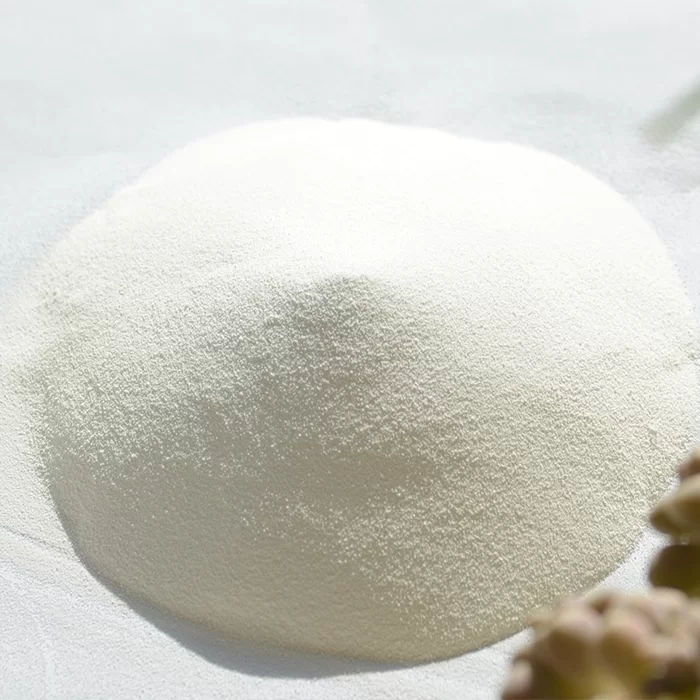
hpmc hpmc-as polymer grades and viscosity

Choosing the Right hpmc hpmc-as polymer grades and viscosity

In the complex landscape of industrial formulations, selecting the precise cellulose ether can differentiate a market-leading product from a generic failure. Manufacturers frequently face the challenge of inconsistent rheology, where slight deviations in polymer performance lead to production downtime or compromised end-product stability. The search for reliable hpmc hpmc-as polymer grades and viscosity specifications is not just about raw materials; it is about securing a partner who understands the delicate balance between chemical integrity and application performance.

Tianjin Runsheng Cellulose Science and Technology Co., Ltd. addresses this critical gap by leveraging over two decades of manufacturing expertise. Established in 1999, our approach combines deep industry experience with a robust product portfolio that spans construction, detergent, and oil drilling applications. Unlike generic suppliers, we function as a technical extension of your team, utilizing our strategic location in the Beijing-Tianjin corridor to ensure that your specific viscosity requirements are met with precision and delivered with logistical speed via the Tianjin Port.

Strategic Advantage: By integrating advanced manufacturing protocols with a prime geographical location, we mitigate supply chain risks while ensuring the chemical consistency of every batch.

Engineering Standards for hpmc hpmc-as polymer grades and viscosity

Precision in polymer science is the cornerstone of our manufacturing philosophy. When evaluating hpmc hpmc-as polymer grades and viscosity, it is essential to look beyond the basic datasheet. The interaction between substitution degrees and molecular weight distribution dictates the water retention, film-forming ability, and thickening efficiency of the final solution. Our facility in the Carpet Industrial Garden focuses on optimizing these parameters to suit specific industrial environments, from high-stress oil drilling fluids to delicate textile applications.

We have established rigorous internal benchmarking to ensure that our cellulose ethers perform predictably under varying thermal and chemical conditions. The table below outlines how our engineering standards translate into tangible advantages for your production line.

Performance Metric Industry Significance Runsheng Engineering Standard Operational Advantage
Viscosity Reproducibility Determines consistency of batch-to-batch formulations. < 2% Deviation tolerance Eliminates the need for constant reformulation adjustments.
Water Retention Rate Critical for cement hydration and open time. Optimized for high-efficiency grades (Construction/PAC) Prevents cracking and improves workability in harsh climates.
Substitution Uniformity Affects solubility and enzyme resistance. Controlled reaction environment Superior stability in detergent and liquid applications.
Purity & Ash Content Impacting clarity and performance integrity. Advanced filtration protocols Reduces nozzle clogging in spray applications and textile printing.

Maximizing ROI with hpmc hpmc-as polymer grades and viscosity

True value engineering extends beyond the price per kilogram. It encompasses the total cost of ownership, including logistics, processing efficiency, and product longevity. Integrating high-quality hpmc hpmc-as polymer grades and viscosity profiles into your supply chain is a strategic investment in operational resilience. Our unique geographical advantage near Tianjin Port allows us to provide efficient global supply chain solutions, significantly reducing lead times and inventory holding costs for our international partners.

By sourcing from a manufacturer with a proven track record since 1999, you minimize the financial risks associated with material variability. Consistent polymer grades translate to reduced waste, lower energy consumption during processing, and higher customer satisfaction with your finished goods. The chart below illustrates the comparative efficiency gains when leveraging our strategically located, high-consistency supply chain versus standard market averages.

Related products

High Quality Hydroxypropyl Methylcellulose Manufacturer and CMC

High Quality Hydroxypropyl Methylcellulose Manufacturer and CMC

When sourcing high-performance cellulose ethers, the stability and purity of the polymer matrix determine the success of the final formulation. Carboxymethylcellulose CMC, often referred to in industrial circles as industrial monosodium glutamate, is a critical non-toxic, tasteless white powder essential for achieving precise rheological control. For professionals in pharmaceutical and food processing, selecting a reliable partner is not just about procurement, but about ensuring that the thickening, suspending, and stabilizing properties remain consistent across every batch. Hebei Tjin Technology Co., Ltd. specializes in the production of high-grade CMC and HPMC, providing tailored viscosity options ranging from 50 to 1200 m.Pas.
Guide to Selecting High Purity hydroxypropyl methylcellulose suppliers

Guide to Selecting High Purity hydroxypropyl methylcellulose suppliers

When evaluating high-performance thickeners for industrial formulations, the selection of a reliable source for cellulose ethers often determines the final products stability and consistency. Many procurement managers struggle to balance the need for precise viscosity control with the requirement for batch-to-batch uniformity, especially in sensitive pharmaceutical and food-grade applications where deviations can lead to significant production losses. The technical efficacy of Hydroxypropyl Methylcellulose HPMC lies in its non-ionic nature and its ability to form stable colloidal solutions. For manufacturers operating within the specialized chemical sector, understanding the interplay between methoxy and hydroxypropyl content is essential.
Technical Guide to Finding a Reliable hydroxypropylmethylcellulose supplier

Technical Guide to Finding a Reliable hydroxypropylmethylcellulose supplier

Cellulose ethers, specifically Hydroxypropyl Methylcellulose HPMC and Sodium Carboxymethyl Cellulose CMC, serve as indispensable functional additives in modern industrial processing. These polymers are prized for their ability to modify rheology, stabilize emulsions, and control water release, making them essential for sectors ranging from pharmaceutical formulation to advanced construction materials. This guide examines the technical nuances and procurement criteria necessary for sourcing these materials effectively. For procurement officers and chemical engineers, the challenge lies in matching the specific chemical grade to the operational environment. Whether the goal is to prevent dehydration in food products or maintain the structural integrity
High Purity CMC Guide and Reliable hpmc powder factory Choice

High Purity CMC Guide and Reliable hpmc powder factory Choice

Sodium Carboxymethyl Cellulose CMC serves as a critical additive in modern chemical engineering, functioning primarily as a thickener, stabilizer, and binder. In industrial environments, the demand for consistent rheological properties necessitates a precise manufacturing process to ensure that the polymer behaves predictably across diverse temperatures and pH levels. This guide explores the technical specifications and procurement considerations for high-purity CMC powder used in pharmaceutical and food processing. For procurement officers and chemical engineers, selecting a reliable hpmc powder factory or cellulose derivative supplier requires an understanding of how chemical purity and viscosity stability impact the final product.

If you are interested in our products, you can choose to leave your information here, and we will be in touch with you shortly.