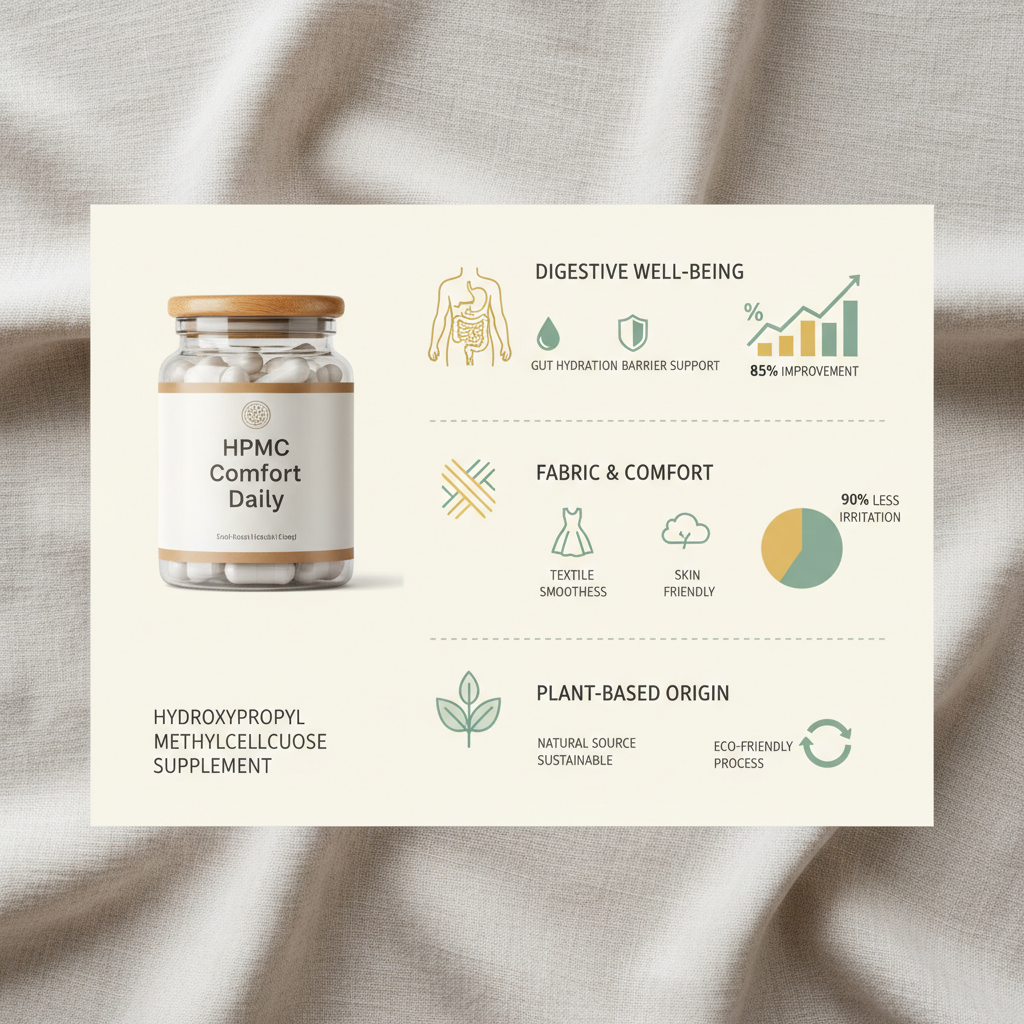
Hydroxypropyl methylcellulose (HPMC) is a versatile polymer gaining prominence across numerous industries, from pharmaceuticals and food to construction and personal care. Its unique properties – including thickening, binding, film-forming, and water retention – make it a crucial ingredient in countless applications. Understanding the nuances of HPMC, especially as a hydroxypropyl methylcellulose supplement, is becoming increasingly vital for professionals and consumers alike seeking innovative and effective solutions.
Globally, demand for HPMC is experiencing significant growth, driven by expanding populations, increasing health awareness, and the need for sustainable and efficient materials. The United Nations Sustainable Development Goals, particularly those related to health, infrastructure, and responsible consumption, indirectly support the adoption of HPMC in diverse applications. This growth necessitates a deep dive into its properties, applications, and future trends.
The increasing complexities of modern manufacturing and the demand for tailored solutions further highlight the importance of understanding HPMC. Its ability to be customized through varying degrees of substitution and viscosity makes it uniquely adaptable to a wide range of formulations. This understanding is crucial for optimizing performance and unlocking new possibilities across industries.

The Fundamentals of Hydroxypropyl Methylcellulose Supplement
Hydroxypropyl methylcellulose supplement, derived from cellulose, is a non-ionic ether cellulose. Its synthesis involves the chemical modification of cellulose, introducing both methyl and hydroxypropyl groups. This process dictates the polymer’s solubility, gelation properties, and overall performance. The specific ratio of these groups allows for tailored properties for specific applications.
Understanding the chemical structure of hydroxypropyl methylcellulose supplement is fundamental to comprehending its behavior. The presence of the hydroxypropyl group enhances water solubility compared to methylcellulose alone, making it suitable for a wider range of formulations. This also impacts its thermal gelation properties – a crucial attribute in many pharmaceutical and food applications.
Global Relevance and Industry Context
The global cellulose ether market, of which HPMC is a significant component, is projected to reach substantial value in the coming years. Reports from market research firms indicate consistent growth, fueled by escalating demand from the pharmaceutical, construction, food, and cosmetics industries. This growth is particularly pronounced in emerging economies where infrastructure development and healthcare access are expanding rapidly.
The construction industry is a major consumer of HPMC, utilizing it as a key ingredient in cement-based materials, tile adhesives, and exterior insulation and finish systems (EIFS). HPMC improves workability, water retention, and adhesion, enhancing the performance and durability of these products. This is crucial in regions prone to extreme weather conditions or seismic activity.
Furthermore, the pharmaceutical sector relies heavily on HPMC as a binder, film-coating agent, and controlled-release matrix in tablet and capsule formulations. The increasing focus on personalized medicine and sustained-release drug delivery systems further drives the demand for high-quality hydroxypropyl methylcellulose supplement.
Defining Hydroxypropyl Methylcellulose Supplement
Hydroxypropyl methylcellulose supplement, in its simplest definition, is a modified cellulose polymer used as a versatile excipient and functional ingredient. It's not a nutrient in itself, but rather a substance added to formulations to provide specific textural, structural, or performance characteristics. This encompasses applications in dietary supplements, pharmaceuticals, and even food products where improved binding, coating, or viscosity is desired.
Its connection to modern industry stems from the need for stable, effective, and reliable formulations. Traditional binders or thickening agents often lacked the consistent performance and compatibility offered by HPMC. The ability to tailor its properties – viscosity, gelation temperature, water solubility – makes it invaluable in a vast array of manufacturing processes.
The humanitarian sector also benefits. The properties of HPMC make it an ideal component in creating rehydration solutions and coatings for essential medicines, improving their shelf life and ease of administration in challenging environments. This underlines the broader impact of hydroxypropyl methylcellulose supplement beyond purely commercial applications.
Key Characteristics of Hydroxypropyl Methylcellulose Supplement
The versatility of HPMC stems from several key characteristics. First, its excellent water solubility allows for easy incorporation into aqueous formulations. Second, its thermal gelation property – the ability to form a gel when heated – is critical in applications like tablet coating and food processing.
Third, HPMC exhibits pseudo-plasticity, meaning its viscosity decreases under shear stress, making it easy to process. Fourth, it is chemically inert and non-toxic, making it safe for use in pharmaceutical and food applications. Finally, it provides excellent film-forming capabilities.
Comparative Analysis of HPMC Grades
Diverse Applications Worldwide
In post-disaster relief operations, HPMC is incorporated into oral rehydration salts (ORS) to improve palatability and electrolyte absorption. Its film-forming properties are also utilized in creating protective coatings for wounds. In remote industrial zones, HPMC finds use in drilling fluids, enhancing their viscosity and preventing fluid loss.
Across Europe and North America, the food industry utilizes HPMC as a thickener, stabilizer, and emulsifier in a wide range of products, from sauces and desserts to baked goods and dairy alternatives. The pharmaceutical sector extensively uses it in controlled-release medications. This wide range of use demonstrates the versatility of hydroxypropyl methylcellulose supplement.
Advantages and Long-Term Value Proposition
The advantages of utilizing HPMC are numerous. Cost-effectiveness is a significant factor, as HPMC offers a high performance-to-price ratio compared to many alternative materials. Its sustainability profile is also attractive, as it’s derived from a renewable resource – cellulose.
From a social impact perspective, HPMC enhances the quality and accessibility of essential medicines and nutritional products. The reliability of its performance – consistent viscosity, stable gelation – builds trust among manufacturers and consumers alike. This translates into long-term value, reducing formulation failures and ensuring product efficacy.
Future Trends and Innovations in Hydroxypropyl Methylcellulose Supplement
Ongoing research is focused on enhancing the properties of HPMC through novel modification techniques, aiming for improved solubility, controlled degradation, and targeted drug delivery capabilities. The integration of nanotechnology with HPMC is also a promising area, potentially leading to enhanced bioavailability and therapeutic efficacy.
The growing emphasis on green chemistry and sustainable manufacturing practices further fuels innovation in HPMC production, with efforts focused on reducing environmental impact and utilizing more sustainable sourcing methods. Digital transformation and automation in manufacturing processes will also play a role in optimizing HPMC production and quality control.
Furthermore, advancements in bioprinting and 3D printing technologies are exploring the use of HPMC as a bioink material, opening up possibilities in tissue engineering and regenerative medicine. These emerging trends suggest a bright future for hydroxypropyl methylcellulose supplement.
Summary of HPMC Application Challenges and Solutions
| Challenge Area | Specific Problem | Potential Solution | Implementation Difficulty (1-10) |
|---|
| Solubility | Incomplete dissolution in cold water | Use of HPMC grades with lower methoxyl content | 3 |
| Gelation Control | Inconsistent gelation temperature | Precise control of HPMC concentration and heating rate | 6 |
| Compatibility | Interaction with other excipients | Careful selection of compatible excipients | 4 |
| Cost Optimization | High cost of certain HPMC grades | Exploring alternative HPMC grades with comparable properties | 5 |
| Shelf Life | Moisture sensitivity affecting stability | Proper packaging and storage in controlled humidity | 2 |
| Processing Challenges | Dusting and handling difficulties | Use of dust control measures and pre-wetted HPMC | 7 |
FAQS
Hydroxypropyl methylcellulose (HPMC) serves multiple vital functions in tablet formulations. Primarily, it acts as a binder, holding the ingredients together. It also controls the rate of drug release, creating sustained-release tablets. Its film-forming properties contribute to coating, protecting the tablet from environmental factors and improving swallowing. HPMC's versatility makes it a crucial excipient for ensuring tablet stability, efficacy, and patient compliance.
Yes, hydroxypropyl methylcellulose is generally considered suitable for both vegan and vegetarian diets. It is derived from cellulose, which comes from plant sources, typically wood pulp or cotton. Unlike gelatin, which is animal-derived, HPMC offers a plant-based alternative for binding, coating, and thickening applications, making it a preferred choice for those adhering to these dietary lifestyles. Always confirm with the manufacturer for specific sourcing details.
While both hydroxypropyl methylcellulose (HPMC) and methylcellulose are cellulose ethers, they differ in their chemical structure and resulting properties. Methylcellulose only contains methyl groups, while HPMC includes both methyl and hydroxypropyl groups. This additional hydroxypropyl substitution enhances HPMC's water solubility and reduces its gelation temperature, making it more versatile for a wider range of applications, particularly those requiring cold-water solubility.
The viscosity of HPMC is a critical parameter that directly impacts its functionality. Higher viscosity grades provide greater thickening and suspension properties, ideal for formulations requiring substantial body. Lower viscosity grades are suitable for applications where ease of handling and flow are paramount, such as coatings or low-dosage tablet binding. Selecting the appropriate viscosity grade is crucial for achieving the desired performance characteristics in a specific application.
Hydroxypropyl methylcellulose is hygroscopic, meaning it readily absorbs moisture from the air. Therefore, it should be stored in a cool, dry place, tightly sealed in its original container. Exposure to humidity can lead to clumping and a decrease in its functionality. Proper storage is essential to maintain its quality and ensure consistent performance over time.
Hydroxypropyl methylcellulose is generally considered more environmentally friendly than many synthetic polymers. It’s derived from cellulose, a renewable resource, and is biodegradable under certain conditions. While the chemical modification process does involve the use of chemicals, advancements in manufacturing are focused on minimizing environmental impact. Its use can also contribute to sustainable formulations by reducing reliance on non-renewable materials.
Conclusion
In conclusion, hydroxypropyl methylcellulose supplement stands as a remarkably versatile and valuable polymer with a broad spectrum of applications spanning pharmaceuticals, food, construction, and beyond. Its unique combination of properties – water solubility, thermal gelation, film-forming capability, and chemical inertness – make it an indispensable ingredient in countless formulations. Understanding its nuances and tailoring its use to specific needs is crucial for maximizing its potential and driving innovation.
Looking ahead, continued research and development promise to unlock even more applications for HPMC, particularly in areas such as sustainable materials, personalized medicine, and advanced manufacturing. Embracing these advancements and prioritizing sustainable production practices will ensure that hydroxypropyl methylcellulose supplement continues to play a vital role in addressing global challenges and improving quality of life. Visit our website at www.tjhpmc.com to learn more.