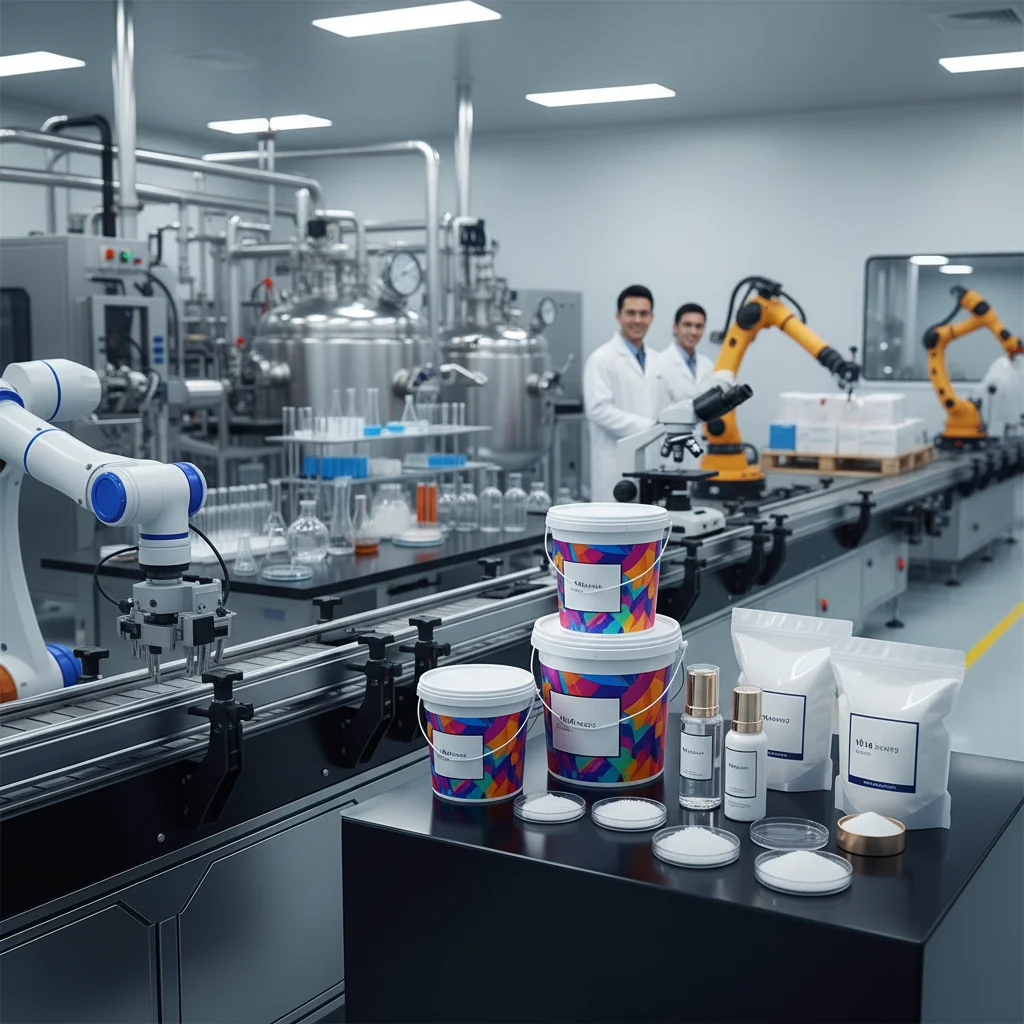
Hydroxypropyl methyl cellulose, often identified in high-performance applications as hpmc k4m, represents a pinnacle of cellulose ether technology. As a non-ionic polymer derived from natural cellulose via etherification, it serves as a critical additive across the pharmaceutical, food, and daily chemical industries, providing essential properties such as thickening, film formation, and water retention.
In a global market demanding higher purity and more consistent rheological properties, the role of hpmc k4m has expanded. Its ability to swell into a clarified colloidal solution while remaining odorless and non-toxic makes it an indispensable tool for formulators seeking to stabilize emulsions or control the release of active ingredients in complex delivery systems.
Understanding the technical specifications of hpmc k4m—from its methoxy content to its gel temperature—is vital for optimizing industrial output. By leveraging its unique characteristics, manufacturers can achieve superior product stability and enhance the end-user experience, ensuring that daily chemical and pharmaceutical products meet stringent international quality standards.

The Chemical Composition of hpmc k4m
The molecular structure of hpmc k4m is characterized by its non-ionic nature, which ensures compatibility with a wide range of other chemical ingredients. By substituting the hydroxyl groups of natural cellulose with methyl and hydroxypropyl groups, the resulting powder achieves a unique balance of hydrophilicity and stability.
This chemical architecture allows hpmc k4m to exhibit exceptional water-retention and dispersing capabilities. The precise control of hydroxypropyl content (typically 4-12%) and methoxy content (19-30%) determines the final product's viscosity and gelation temperature, making it versatile for diverse industrial needs.
Industrial Grade Classifications of hpmc k4m
Depending on the end-use, hpmc k4m is produced in several specialized grades. The Pharmaceutical grade is engineered to serve as a hydrophilic gel skeleton material, a pore-causing agent, and a coating agent, which are essential for the preparation of sustained-release drug delivery systems.
In the food industry, the food-grade variant of hpmc k4m functions as a multipurpose additive. It is utilized for adhesion, emulsification, and thickening, ensuring that processed foods maintain a consistent texture and prolonged shelf life through superior water retention.
The daily chemical grade focuses on versatility in consumer goods. When integrated into toothpaste, cosmetics, or detergents, hpmc k4m acts as a stabilizer and thickener, improving the tactile feel and delivery of the product while ensuring that active ingredients remain evenly dispersed.
Core Functional Properties of hpmc k4m
One of the most valued attributes of hpmc k4m is its ability to act as a protective colloid and emulsifier. This prevents the separation of oil-and-water mixtures, which is critical for the stability of high-end skincare creams and pharmaceutical emulsions.
The water-retention capacity of hpmc k4m is unmatched in many applications. By binding water molecules effectively, it prevents rapid dehydration in formulations, which is a primary requirement for both sustained-release medication and moisture-stable food products.
Furthermore, the film-forming property of hpmc k4m creates a thin, transparent barrier. This is particularly useful in tablet coating and certain cosmetic applications, providing a protective layer that controls the interaction between the product and the environment.
Performance Metrics and Viscosity of hpmc k4m
The technical efficiency of hpmc k4m is measured through a strict set of parameters. Viscosity, often ranging from 17,000 to 200,000 mPa.s depending on the specific batch, defines the flow characteristics and thickening power of the resulting solution.
Other critical metrics include the gel temperature (typically 60-70°C) and the pH value of a 1% aqueous solution, which usually stays between 5.5 and 8. These parameters ensure that hpmc k4m remains stable under various processing temperatures and chemical environments.
hpmc k4m Performance Comparison
Global Application Scenarios for hpmc k4m
Across the globe, hpmc k4m is utilized in diverse industrial zones to solve stability challenges. In pharmaceutical hubs, it is a primary choice for creating controlled-release matrices that ensure medication is delivered steadily over time, improving patient adherence and efficacy.
In the food processing sectors of Europe and Asia, hpmc k4m is used to stabilize sauces and creams, preventing syneresis (water separation). Its non-toxic and odorless nature ensures that the sensory qualities of the food are preserved while achieving the desired viscosity.
Quality Control Standards for hpmc k4m
Maintaining the consistency of hpmc k4m requires rigorous testing protocols. Key quality control steps include the measurement of the Whiteness Value to ensure purity and the precise detection of Methyl Content to verify the etherification process.
Viscosity measurement is conducted using standardized equipment to ensure that every batch of hpmc k4m meets the specific requirements of the customer, whether it is for a high-viscosity pharmaceutical gel or a lower-viscosity cosmetic lotion.
Furthermore, the Ash Content and Moisture levels are strictly monitored (Moisture ≤ 5% and Ash ≤ 1.5%). These limits prevent contamination and ensure a long shelf life, making hpmc k4m a reliable raw material for global supply chains.
Strategic Advantages of Choosing hpmc k4m
The primary advantage of integrating hpmc k4m into a production line is the ability to customize the formulation. With tailored options available, manufacturers can adjust the viscosity and gel temperature to fit specific environmental conditions or product requirements.
From a cost-efficiency perspective, the high potency of hpmc k4m means that smaller quantities are required to achieve the desired thickening effect. This reduces overall raw material costs while improving the sustainability of the manufacturing process.
Ultimately, the trust associated with hpmc k4m stems from its consistency. By providing superior quality products backed by innovative solutions, suppliers ensure that end-products are safe, effective, and meet the highest industry benchmarks for reliability.
Technical Analysis of hpmc k4m Grade Specifications
| Grade Type |
Viscosity Range (mPa.s) |
Primary Function |
Application Focus |
| Pharmaceutical Grade |
100,000 - 200,000 |
Sustained Release |
Drug Delivery |
| Food Grade |
50,000 - 150,000 |
Emulsification |
Food Processing |
| Cosmetic Grade |
20,000 - 80,000 |
Thickening |
Skin Care/Lotions |
| Detergent Grade |
17,000 - 40,000 |
Dispersion |
Cleaning Agents |
| Specialty High Visc |
> 200,000 |
Strong Gelation |
Industrial Gels |
| Standard Grade |
50,000 - 100,000 |
Water Retention |
General Purpose |
FAQS
In pharmaceuticals, hpmc k4m is primarily used as a hydrophilic gel skeleton material. Its main benefit is the ability to create a controlled matrix for sustained-release preparations, ensuring that active pharmaceutical ingredients are released at a constant rate, which improves the drug's therapeutic window and reduces dosing frequency for the patient.
Hpmc k4m acts as a powerful thickening and emulsifying agent in food processing. It improves texture by providing a smooth consistency and prevents the separation of water and oil (syneresis). Its water-retention properties also help maintain the moisture levels of the food, extending shelf life and improving the sensory experience for the consumer.
Yes, hpmc k4m is an odorless, tasteless, and non-toxic white powder. Its non-ionic nature makes it gentle on the skin and compatible with various cosmetic active ingredients. It is widely used as an additive in toothpaste and high-end skincare to provide the necessary viscosity and stability without causing irritation.
The gel temperature (typically 60-70°C) is the point at which the hpmc k4m solution transforms into a gel. This thermal gelation property is critical for applications where the product must remain fluid during processing but form a stable gel upon heating or during specific chemical reactions, allowing for precise control over product structure.
Viscosity is measured using high-precision viscometers on a standardized 1% aqueous solution at 25°C. Control is achieved during the etherification process by adjusting the substitution levels of methyl and hydroxypropyl groups. This allows the supplier to offer a range of viscosities from 17,000 to 200,000 mPa.s to meet specific industrial needs.
The strategic advantage of hpmc k4m lies in its combination of non-ionic stability, exceptional water retention, and versatility across three major industries (Pharma, Food, Daily Chem). Its consistent quality, low ash content, and the availability of customizable specifications make it a more reliable and cost-effective choice for high-performance formulations.
Conclusion
In summary, hpmc k4m stands as a versatile and high-performance cellulose ether that provides essential rheological control across the pharmaceutical, food, and daily chemical sectors. Its unique ability to balance thickening, emulsification, and water retention—backed by rigorous quality control of viscosity and purity—makes it an indispensable additive for modern industrial formulations.
Looking forward, the adoption of hpmc k4m is expected to grow as industries shift toward more sustainable, non-toxic, and bio-based polymers. For manufacturers seeking to enhance product stability and operational efficiency, investing in high-grade HPMC solutions is a strategic move toward innovation and quality excellence. Visit our website for more information: www.tjhpmc.com