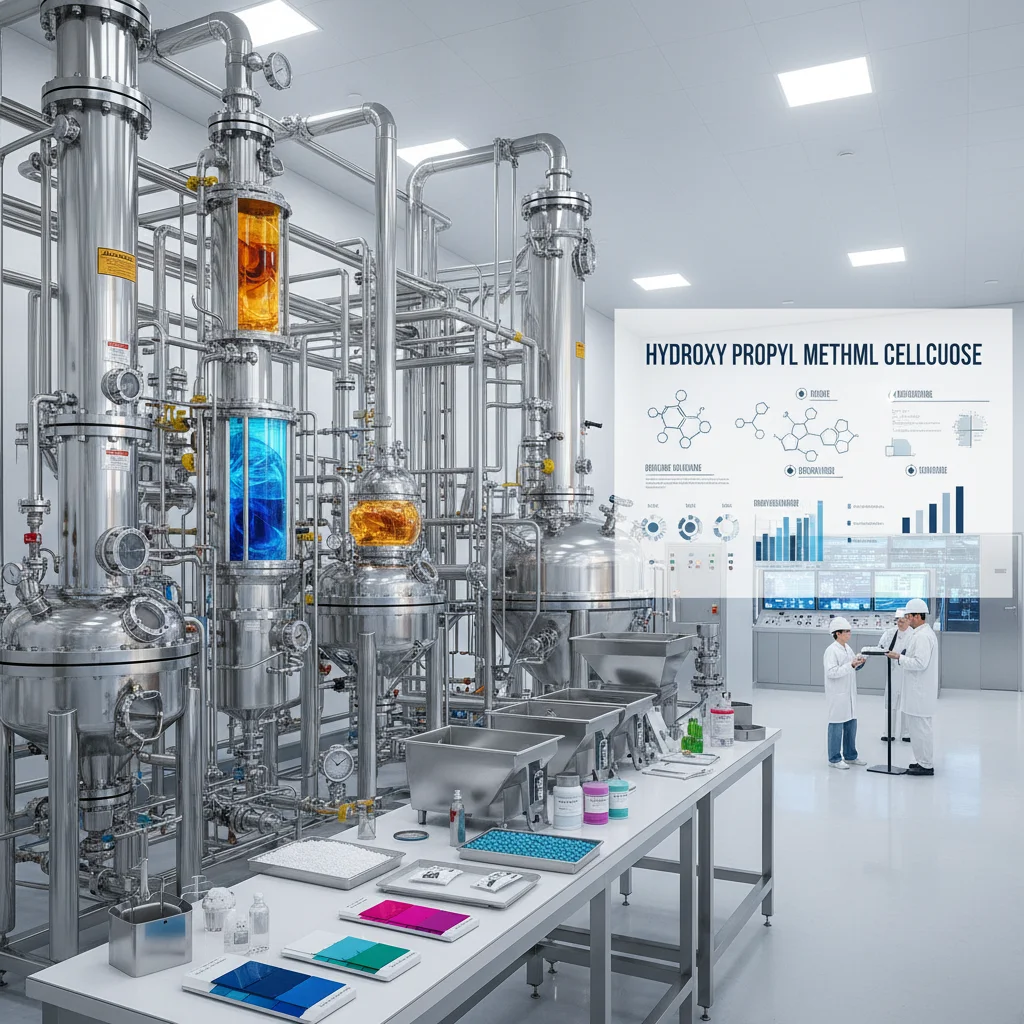
In the modern landscape of specialized chemical manufacturing, the development of hpmc gel has emerged as a pivotal advancement in polymer science. This non-ionic cellulose ether, derived through precise etherification of natural polymers, provides an unparalleled combination of viscosity control and thermal gelation properties that are essential for high-performance industrial applications.
Understanding the mechanics of hpmc gel is not merely a technical necessity for chemists but a strategic advantage for manufacturers looking to optimize product stability and texture. Its ability to transition from a liquid to a gel at specific temperatures allows for controlled release and superior structural integrity in everything from pharmaceutical capsules to sophisticated construction adhesives.
Globally, the demand for high-purity hpmc gel is driven by the push toward safer, non-toxic, and bio-compatible additives. By bridging the gap between natural raw materials and synthetic performance, this material ensures that industrial processes remain efficient while meeting stringent international safety and quality standards.

Global Relevance of HPMC Gel in Industry
The global market for cellulose ethers has seen a significant shift toward the adoption of hpmc gel due to its versatile functionality. According to international industrial standards, the ability to maintain consistency in viscosity across different batches is critical for ISO-certified manufacturing. This material has become a cornerstone in the pharmaceutical and daily chemical sectors, where precise rheological properties determine the efficacy of the final consumer product.
The primary challenge addressed by hpmc gel is the inherent instability of many aqueous solutions. By providing a robust protective colloid layer, it prevents phase separation and ensures that active ingredients remain evenly dispersed. This is particularly vital in the production of sustained-release medications and high-end cosmetics, where a failure in gel stability can lead to product recall and significant financial loss.
Defining the Chemical Nature of HPMC Gel
At its most fundamental level, hpmc gel is a non-ionic cellulose ether produced through the reaction of cellulose with methyl chloride and propylene oxide. This chemical architecture allows the material to be soluble in cold water while exhibiting a unique "thermal gelation" property—meaning it forms a gel as the temperature increases, a characteristic that differentiates it from many other thickening agents.
In the context of modern industry, this gel serves as a bridge between raw natural polymers and high-tech functional materials. Whether it is used as a binder in tablet compression or a stabilizer in detergents, the "gel" state refers to the semi-rigid structure formed by the entanglement of polymer chains, which traps water and creates the desired thickness and flow characteristics.
Beyond the technical definition, the significance of hpmc gel lies in its biocompatibility. Being non-toxic, odorless, and tasteless, it fulfills the humanitarian and safety requirements of the food and drug administrations globally, ensuring that the end-user is not exposed to harmful synthetic residuals.
Core Components Influencing HPMC Gel Performance
The efficiency of hpmc gel is primarily dictated by its degree of substitution—specifically the methoxy and hydroxypropyl content. A higher methoxy content generally increases the thermal gelation temperature, while the hydroxypropyl groups enhance water solubility and stability across varying pH levels.
Viscosity is another critical factor; ranging from 17,000 to 200,000 mPa.s, the viscosity of hpmc gel determines its suitability for different applications. For instance, low-viscosity grades are ideal for spray-drying processes, whereas high-viscosity grades are essential for providing structural support in heavy-duty industrial coatings.
Finally, the purity of the raw cellulose and the precision of the etherification process ensure that the hpmc gel remains free of impurities. Low ash content and controlled moisture levels (≤ 5%) are vital to prevent microbial growth and ensure a long shelf-life for the finished chemical product.
Practical Applications and Sector Integration
The versatility of hpmc gel allows it to penetrate multiple high-value industries. In the pharmaceutical sector, it acts as a hydrophilic gel skeleton, enabling the creation of tablets that release medication slowly over time, thereby improving patient compliance and therapeutic outcomes.
In the realm of daily chemicals, hpmc gel is the secret behind the smooth texture of premium toothpaste and the stable foam of luxury detergents. Its ability to act as an emulsifier prevents the separation of oil and water phases, ensuring a consistent consumer experience regardless of storage temperature.
Comparative Performance Analysis of HPMC Gel Grades
Tangible Advantages and Long-Term Value
One of the most significant advantages of utilizing hpmc gel is the reduction in production waste. Due to its superior water retention capacity, manufacturers can use less solvent and achieve a more stable mixture, which directly translates to lower raw material costs and a smaller environmental footprint.
Furthermore, the long-term value of hpmc gel is found in its reliability. By ensuring that products do not degrade or separate over time, brands can build deeper trust with their customers. The emotional angle of "safety" is paramount here—knowing that the additive is non-toxic provides peace of mind for both the producer and the end-consumer.
Future Trends in HPMC Gel Innovation
The future of hpmc gel is leaning heavily toward "green chemistry." Innovations are focusing on sourcing cellulose from sustainable forest waste and using enzyme-assisted etherification to reduce the reliance on harsh chemical reagents. This shift not only aligns with global ESG (Environmental, Social, and Governance) goals but also improves the purity of the final gel.
Digital transformation is also playing a role through the implementation of AI-driven viscosity modeling. By using machine learning, manufacturers can now predict the exact gelation temperature of an hpmc gel batch based on the substitution levels, allowing for hyper-customized products that meet the exact needs of a specific client.
Additionally, we are seeing a rise in "smart gels"—modified versions of hpmc gel that can respond to external stimuli like magnetic fields or specific pH changes. These innovations open new doors in targeted drug delivery and advanced 3D bio-printing, where the gel acts as a temporary scaffold for cell growth.
Challenges and Technical Solutions
Despite its benefits, the implementation of hpmc gel often faces challenges regarding solubility speed. In high-volume production, "clumping" or the formation of "fish-eyes" can occur when the powder is added too quickly to water, leading to uneven viscosity and wasted material.
To solve this, industry experts recommend the use of high-shear mixing equipment or the pre-dispersion of the powder in a small amount of organic solvent. By controlling the wetting process, manufacturers can ensure that the hpmc gel hydrates uniformly, resulting in a crystal-clear solution without lumps.
Another common limitation is the sensitivity of the gel temperature to salt concentrations. To overcome this, we provide customizable options where the methoxy content is specifically adjusted to maintain stability even in high-salinity environments, ensuring the hpmc gel performs consistently regardless of the other additives in the formulation.
Technical Specification and Performance Analysis of HPMC Gel Variations
| Grade Type | Viscosity Range (mPa.s) | Gel Temp (°C) | Primary Use Case |
|---|
| Pharma-Pure | 50,000 - 100,000 | 65 - 70 | Sustained Release Tablets |
| Food-Stable | 20,000 - 60,000 | 60 - 65 | Emulsified Sauces |
| Cosmetic-Smooth | 17,000 - 40,000 | 62 - 68 | Facial Gels & Creams |
| Industrial-Strong | 100,000 - 200,000 | 60 - 64 | Construction Adhesives |
| Daily-Chem | 30,000 - 70,000 | 64 - 67 | Liquid Detergents |
| Eco-Polymer | 40,000 - 80,000 | 66 - 72 | Biodegradable Films |
FAQS
The primary difference lies in the purity levels and the specific substitution of methoxy/hydroxypropyl groups. Pharmaceutical grade hpmc gel undergoes more rigorous purification to ensure it is free from all contaminants, as it is used for internal human consumption, whereas industrial grade focuses more on high-viscosity strength and cost-efficiency for structural applications.
The gel temperature (usually 60-70°C) is the point where the solution transitions from a liquid to a gel. If your product needs to remain liquid during a hot-filling process, you need an hpmc gel with a higher gelation temperature. If the product is designed to thicken upon heating, a lower gel temperature is preferred.
Yes, hpmc gel is often used in synergy with CMC (Carboxymethyl Cellulose) to achieve a specific rheological profile. While CMC provides excellent thickening at room temperature, HPMC adds thermal stability and better film-forming properties, creating a more balanced and stable formulation.
To prevent clumping in hpmc gel, we recommend adding the powder slowly to the water while stirring at high speed. Alternatively, dispersing the powder in a small amount of glycerin or alcohol before adding water will ensure a smooth, lump-free gelation process.
Because HPMC is derived from natural cellulose, it is widely accepted in many "natural" formulations. However, for strict organic certifications, you must verify that the etherification process used to create the hpmc gel complies with the specific standards of the certifying body (e.g., COSMOS or USDA Organic).
When stored in a cool, dry place and kept in original sealed packaging, hpmc gel powder typically has a shelf life of 24 months. Moisture is the biggest enemy, as it can cause the powder to cake, making it harder to disperse during the gelation process.
Conclusion
In summary, hpmc gel represents a critical intersection of natural polymer science and industrial utility. By mastering the variables of viscosity, gel temperature, and substitution levels, manufacturers can significantly enhance the stability, texture, and safety of their products across the pharmaceutical, food, and chemical sectors. The ability of this material to provide reliable water retention and thermal gelation ensures that it remains an indispensable tool for those seeking high-performance formulations.
Looking ahead, the transition toward sustainable sourcing and AI-optimized production will only further solidify the role of hpmc gel in the global market. For businesses aiming to reduce waste and improve end-user experience, investing in premium, high-purity cellulose ethers is not just a technical choice, but a commitment to quality and innovation. To optimize your current formulations, we invite you to explore our specialized grades. Visit our website: www.tjhpmc.com