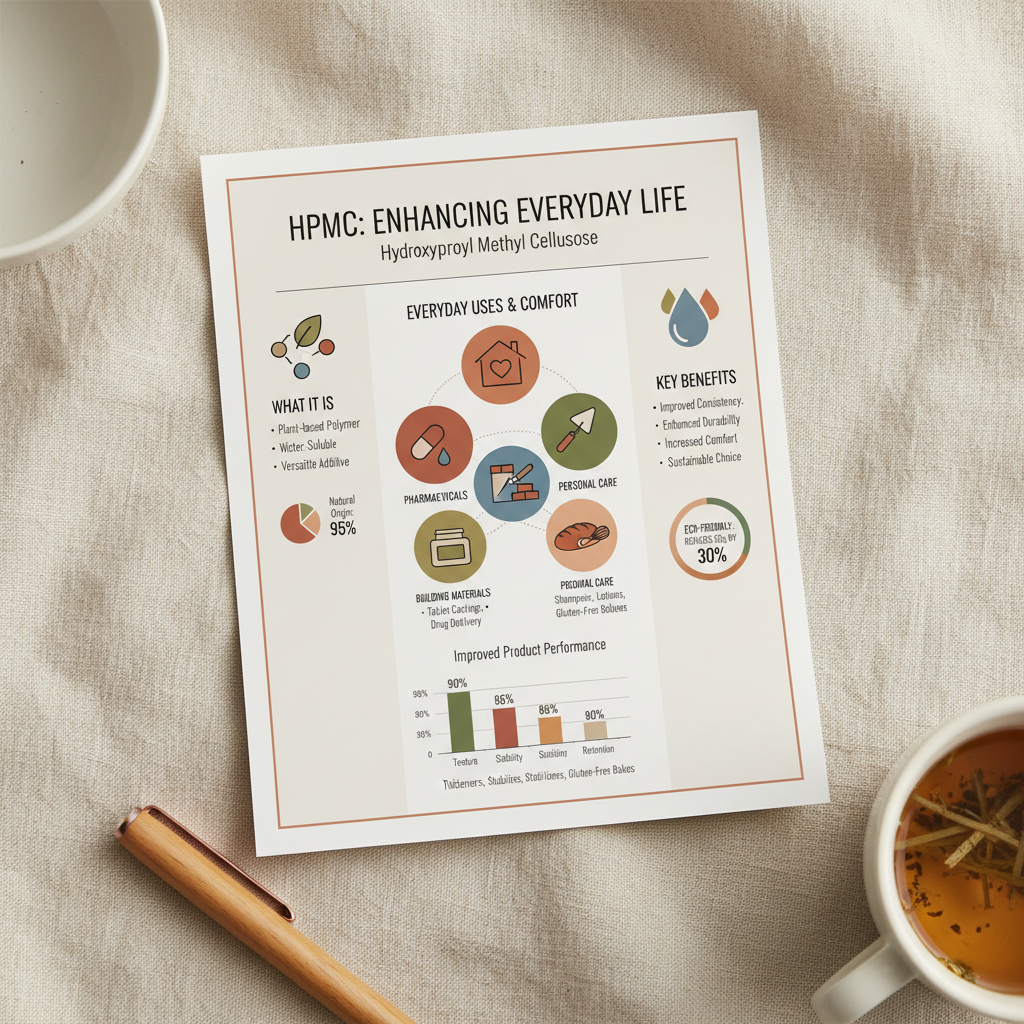
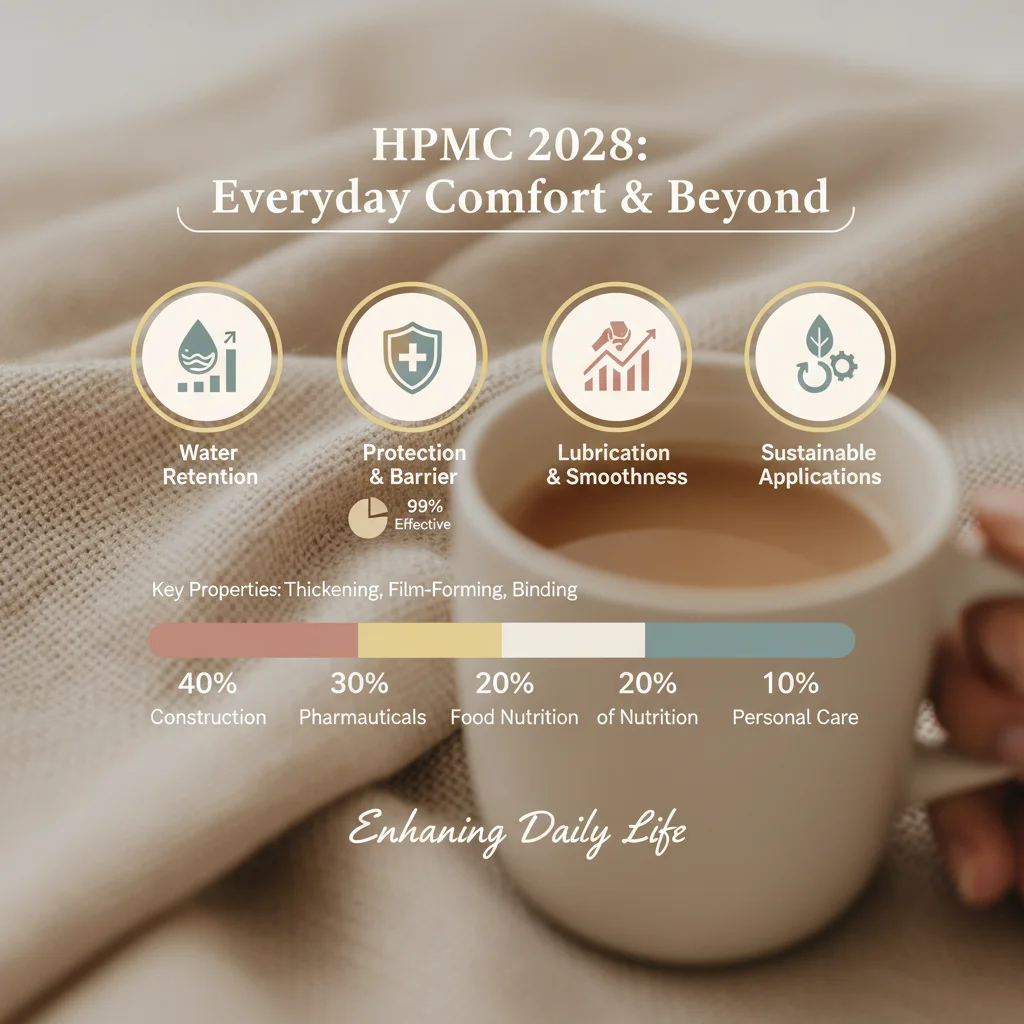
Hydroxypropyl methyl cellulose (hpmc) is a versatile cellulose ether derivative gaining global prominence across a multitude of industries. Its unique properties – including water retention, thickening, film-forming, and suspension – address critical challenges in construction, pharmaceuticals, food, cosmetics, and beyond. Understanding hpmc is increasingly crucial for professionals seeking innovative, sustainable, and high-performing materials. This material’s adaptability is fueling its demand, particularly in regions experiencing rapid urbanization and a growing focus on product quality and efficacy.
The increasing global population and the associated demand for improved infrastructure, healthcare, and consumer products are driving the need for materials like hpmc. According to market analysis, the hpmc market is projected to reach significant growth in the coming years, reflecting its expanding applications. Furthermore, stringent regulations concerning product safety and environmental impact are favoring the use of bio-based, non-toxic polymers such as hpmc hydroxypropyl methyl cellulose. This rising demand underscores the need for comprehensive knowledge of its properties and applications.
Ultimately, hpmc offers a compelling solution to diverse industrial needs, functioning as a crucial ingredient to enhance the overall performance, stability, and aesthetic appeal of various products. Its accessibility and adaptability make it a valuable resource for innovation and problem-solving on a global scale.

Introduction to hpmc hydroxypropyl methyl cellulose
hpmc hydroxypropyl methyl cellulose is a non-ionic, water-soluble polymer derived from cellulose, a naturally abundant component of plant cell walls. Its production involves chemical modification of cellulose, introducing hydroxypropyl and methyl groups to impart specific properties. This customization allows for a wide range of viscosity levels, gelation temperatures, and water solubility characteristics, making it adaptable to diverse applications.
The core function of hpmc lies in its ability to modify the rheological properties of aqueous systems, meaning it alters how liquids flow. This makes it indispensable in sectors requiring precise control over viscosity, such as construction materials, pharmaceutical coatings, and food processing. Its inherent biocompatibility and non-toxicity further expand its utility in sensitive applications.
Global Relevance and Market Context
The global demand for cellulose ethers, including hpmc, is steadily rising, driven by urbanization, infrastructure development, and the growing pharmaceutical and food industries. Asia-Pacific currently represents the largest market for hpmc, owing to rapid industrialization and population growth in countries like China and India. North America and Europe also represent significant markets, fueled by stringent quality standards and innovation in specialized applications.
According to recent reports, the hpmc market is projected to experience a compound annual growth rate (CAGR) of approximately 6-8% over the next decade. This growth is partially attributed to the increasing adoption of hpmc in sustainable building materials, aiming to reduce carbon footprint and enhance energy efficiency. Furthermore, pharmaceutical companies are leveraging hpmc's controlled-release properties to develop advanced drug delivery systems.
A key challenge facing the hpmc industry is maintaining a sustainable supply chain of cellulose raw materials. Efforts are underway to promote responsible forestry practices and explore alternative cellulose sources to mitigate environmental impacts and ensure long-term availability. hpmc hydroxypropyl methyl cellulose manufacturers are increasingly focusing on eco-friendly production processes and bio-based alternatives to address these concerns.
Defining hpmc hydroxypropyl methyl cellulose
At its core, hpmc hydroxypropyl methyl cellulose is a modified cellulose polymer. Cellulose, sourced primarily from wood pulp or cotton linters, undergoes a series of chemical reactions to introduce both methyl (-CH3) and hydroxypropyl (-CH2CHOHCH3) groups along the cellulose chain. The ratio of these substituents determines the specific properties of the resulting hpmc grade. This precise control over chemical composition is fundamental to tailoring hpmc for specialized applications.
The significance of hpmc extends beyond its chemical structure. It’s a critical ingredient in countless everyday products, functioning as a thickener, binder, film former, protective colloid, and water retention agent. This versatility stems from its ability to interact with both water and organic substances, creating stable and functional formulations. This interaction is particularly crucial in industries prioritizing product stability and performance.
Hpmc’s relevance is deeply intertwined with modern industrial and humanitarian needs. From ensuring the stability of pharmaceutical formulations to enhancing the workability of construction materials, its unique properties address fundamental challenges in diverse sectors, contributing to improved product quality and operational efficiency.
Key Properties of hpmc hydroxypropyl methyl cellulose
The defining characteristics of hpmc fall into several key areas. Viscosity is perhaps the most important, dictating the flow behavior of solutions and impacting product texture and application. Different grades of hpmc offer a broad spectrum of viscosity levels to suit specific requirements. Water Retention is another crucial property, preventing premature drying and ensuring consistent performance in applications like cement-based materials and adhesives.
Furthermore, hpmc exhibits excellent Film-Forming capabilities, creating strong, flexible, and transparent films used in coatings, tablets, and packaging. Its ability to act as a Protective Colloid prevents particle aggregation and maintains suspension stability in various formulations. Finally, hpmc’s Thermal Gelation property – where it transitions from a liquid to a gel upon heating – is vital in applications like controlled-release drug delivery systems.
Comparison of hpmc hydroxypropyl methyl cellulose Grades
Diverse Applications of hpmc hydroxypropyl methyl cellulose
The versatility of hpmc hydroxypropyl methyl cellulose shines in its wide-ranging applications. In the construction industry, it’s used as a water retention agent in cement-based plasters, mortars, and tile adhesives, improving workability, adhesion, and preventing cracking. In the pharmaceutical sector, it acts as a binder, film coating agent, and controlled-release matrix in tablets and capsules, enhancing drug efficacy and patient compliance.
Furthermore, hpmc plays a critical role in the food industry as a thickener, stabilizer, and emulsifier in products like sauces, dressings, baked goods, and dairy alternatives. It also finds use in the cosmetics industry as a film former, thickener, and stabilizer in creams, lotions, shampoos, and mascaras. In paints and coatings, it improves application properties, pigment suspension, and film durability. Its use is also growing in personal care products due to its non-toxic nature.
Advantages and Long-Term Value of hpmc
Employing hpmc offers substantial benefits across diverse applications. Cost-effectiveness is a key advantage, as it's a relatively inexpensive polymer compared to many synthetic alternatives. Its sustainability profile is also attractive, being derived from a renewable resource (cellulose) and exhibiting biodegradable properties. From an operational standpoint, it improves processing efficiency and product performance, reducing waste and enhancing overall quality.
Beyond tangible benefits, hpmc contributes to increased safety and reliability in various products. Its non-toxicity and biocompatibility make it suitable for sensitive applications like pharmaceuticals and food. The resulting enhanced product stability, consistency, and performance build trust with consumers and contribute to brand reputation.
Future Trends and Innovations in hpmc
Research and development efforts are focused on enhancing the properties of hpmc through innovative modifications and blending with other polymers. This includes exploring new methods for controlling particle size, morphology, and substitution patterns to tailor performance characteristics. The incorporation of nanotechnology to create hpmc-based nanocomposites with improved mechanical strength and barrier properties is also gaining traction.
A significant trend is the development of sustainable and bio-based hpmc production processes, utilizing alternative cellulose sources and reducing reliance on traditional chemical methods. Integration with digital technologies, such as machine learning and artificial intelligence, to optimize formulation development and process control is another promising avenue.
The rise of personalized medicine and targeted drug delivery systems will further drive demand for specialized hpmc grades with precisely controlled release profiles. Furthermore, the pursuit of greener building materials will continue to fuel the adoption of hpmc in sustainable construction applications.
Challenges and Solutions
Despite its benefits, the widespread adoption of hpmc faces certain challenges. Maintaining consistent quality and purity across different batches and suppliers can be problematic. Ensuring a reliable and sustainable supply of cellulose raw materials is another ongoing concern. Finally, achieving optimal dispersion and compatibility with other ingredients in complex formulations can require careful optimization.
Overview of Solutions for Hpmc Challenges
| Challenge |
Impact on hpmc Performance |
Proposed Solution |
Implementation Cost (1-10) |
| Inconsistent Raw Material Quality |
Variations in viscosity and gelation properties. |
Strict supplier qualification and raw material testing protocols. |
5 |
| Supply Chain Disruptions |
Increased production costs and potential delays. |
Diversification of sourcing and development of alternative cellulose sources. |
7 |
| Dispersion Challenges |
Non-uniform product consistency and reduced performance. |
Optimized mixing techniques and use of dispersing agents. |
4 |
| Batch-to-Batch Variability |
Difficulty in maintaining consistent product quality. |
Implementation of rigorous quality control measures. |
6 |
| Cost of Sustainable Sourcing |
Higher production expenses compared to conventional methods. |
Long-term contracts and collaboration with sustainable suppliers. |
8 |
| Limited Thermal Stability |
Degradation at high temperatures affecting product performance. |
Encapsulation techniques and blending with heat-stabilizing agents. |
5 |
FAQS
Different grades of hpmc primarily vary in their viscosity, gelation temperature, and degree of substitution. Viscosity affects the thickness and flow properties of solutions, while gelation temperature determines the temperature at which the solution transitions into a gel. The degree of substitution, referring to the amount of methyl and hydroxypropyl groups attached to the cellulose chain, influences solubility, water retention, and surface activity. Selecting the appropriate grade depends on the specific application requirements.
Hpmc is considered biodegradable under certain conditions, although the rate of degradation can vary depending on the environment. As it's derived from cellulose, a renewable resource, it is generally considered more environmentally friendly than many synthetic polymers. However, the production process does involve chemical modifications, and responsible manufacturing practices are crucial to minimize environmental impact. Seeking hpmc from sustainable sources is also recommended.
Hpmc should be stored in a cool, dry, and well-ventilated area, away from direct sunlight and moisture. Exposure to humidity can cause clumping and affect its performance. It's best to keep it in its original, sealed container to prevent contamination. Proper storage is essential for preserving its viscosity and functionality over time.
In the pharmaceutical industry, hpmc is widely used as a binder in tablet formulations, a film coating agent to protect tablets and control drug release, and as a thickening agent in liquid dosage forms. It’s also used in controlled-release matrix tablets, ophthalmic solutions, and topical creams. Its biocompatibility and non-toxicity make it a safe and effective excipient.
Hpmc significantly improves the workability of cement-based materials by enhancing water retention, reducing water loss during application, and increasing the open time. This results in improved adhesion, reduced cracking, and better overall performance of plasters, mortars, and tile adhesives. It also contributes to a smoother and more consistent finish.
While hpmc is generally considered non-toxic, it’s recommended to avoid inhaling the dust, as it can cause respiratory irritation. Wearing a dust mask during handling is advisable, particularly when working with large quantities. Avoid contact with eyes and skin, and wash thoroughly after handling. Consult the Material Safety Data Sheet (MSDS) for detailed safety information.
Conclusion
In conclusion, hpmc hydroxypropyl methyl cellulose is a remarkably versatile polymer with a growing range of applications across diverse industries. Its unique combination of properties – including water retention, thickening, film-forming, and biocompatibility – addresses critical challenges and enhances product performance. The continued innovation in hpmc production and modification promises even wider adoption and expanded functionality in the future.
Looking ahead, a greater emphasis on sustainable sourcing, responsible manufacturing, and tailored formulation development will be crucial to unlock the full potential of hpmc. By embracing these principles, industries can leverage hpmc's benefits while minimizing environmental impact and fostering long-term value creation. Visit our website at www.tjhpmc.com to learn more about our range of hpmc products and solutions.