Hydroxypropyl methylcellulose (HPMC) is a versatile cellulose ether derivative used across a remarkably broad range of industries. Its unique properties – including thickening, binding, film-forming, and water retention – make it an indispensable ingredient in everything from pharmaceuticals and food to construction and personal care products. Understanding HPMC’s functionalities is crucial for optimizing product performance, enhancing manufacturing processes, and driving innovation in numerous sectors.
Globally, the demand for HPMC is steadily increasing, driven by population growth, rising health awareness, and expanding industrialization, particularly in emerging economies. The market is characterized by a need for consistent quality, reliable supply chains, and tailored solutions to meet specific application requirements. Supply chain disruptions and a growing focus on sustainable materials present ongoing challenges.
At its core, HPMC functions as a crucial excipient and additive, influencing viscosity, texture, stability, and controlled release. Its adaptability makes it a key component in modern formulations, addressing both functional and aesthetic needs. The importance of this polymer extends beyond mere functionality; it’s contributing to more efficient and sustainable products worldwide.

Introduction to Hydroxy Propyl Methyl Cellulose HPMC
The versatility of hydroxy propyl methyl cellulose hpmc stems from its ability to modify the physical properties of aqueous systems. This modification is vital for creating stable, efficient, and user-friendly products across countless sectors. It’s more than just an ingredient; it’s a formulation enabler.
From enhancing the texture of food products to ensuring the sustained release of medication, HPMC’s impact is felt daily. The ongoing research and development focused on tailoring HPMC's characteristics demonstrate its enduring relevance in an evolving market landscape.
Global Relevance and Market Drivers
The global HPMC market is estimated to be worth billions of dollars and is expected to continue its upward trajectory in the coming years. Key drivers include the increasing demand for processed foods, the growing pharmaceutical industry, and the expanding construction sector in developing nations. According to recent industry reports, Asia-Pacific is the largest consumer of HPMC, accounting for a significant share of global demand. This growth is directly linked to rapid urbanization and industrialization within the region.
A major challenge facing the HPMC industry is ensuring a stable and sustainable supply of raw materials. Cellulose, the primary source for HPMC production, is derived from wood pulp and cotton linters. Increasing concerns about deforestation and sustainable sourcing practices are driving demand for responsibly produced HPMC. Manufacturers are actively exploring alternative cellulose sources and implementing sustainable production methods.
Furthermore, stringent regulatory requirements regarding product quality and safety are shaping the HPMC market. Compliance with international standards such as ISO 9001 and GMP is crucial for manufacturers to maintain market access and build customer trust. These regulations are constantly evolving, requiring continuous adaptation and investment in quality control systems.
Defining Hydroxy Propyl Methyl Cellulose HPMC
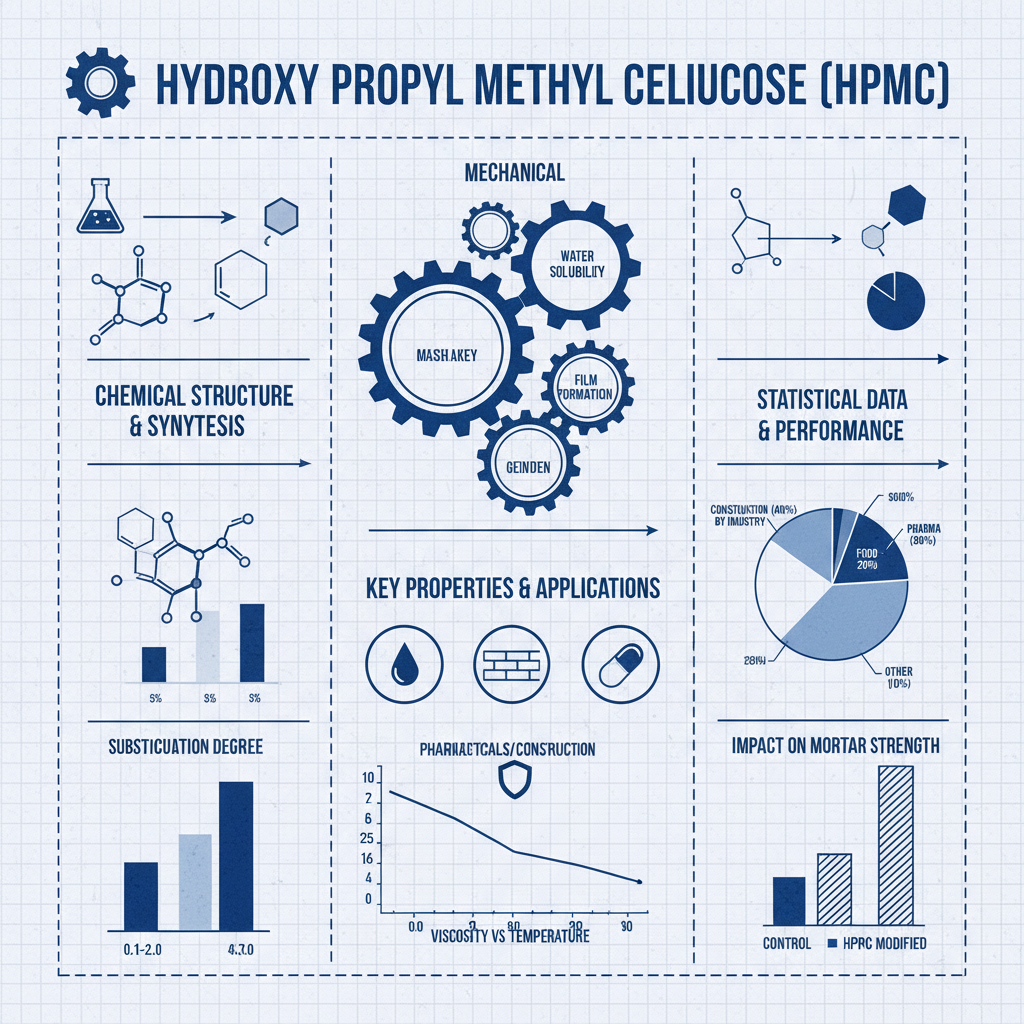
Hydroxypropyl methylcellulose (HPMC) is a non-ionic, water-soluble polymer derived from cellulose. It is produced by chemically modifying cellulose through a series of reactions involving methyl chloride and propylene oxide. The resulting product is a white, odorless, tasteless powder that exhibits a range of viscosities depending on the degree of substitution and molecular weight.
Its connection to modern industry is profound. HPMC isn’t merely a supporting agent; it’s an integral component that dictates functionality in countless products. In pharmaceuticals, it's a crucial film-coating agent and controlled-release matrix. In the food industry, it acts as a thickener, stabilizer, and emulsifier. In construction, it is used to improve workability and water retention in cement-based materials, reflecting its wide-ranging impact on modern humanitarian needs and infrastructural development.
The specific ratio of methyl and hydroxypropyl groups determines the HPMC’s properties, influencing its solubility, gelation temperature, and surface activity. Understanding these nuances is vital for selecting the appropriate HPMC grade for a given application, highlighting the importance of specialized manufacturing and quality control.
Key Properties of Hydroxy Propyl Methyl Cellulose HPMC
One critical aspect of hydroxy propyl methyl cellulose hpmc is its excellent thermal gelation property. When heated, HPMC solutions transition from a liquid to a gel, a characteristic leveraged in many food and pharmaceutical applications. This gelation is reversible, meaning the gel reverts to a liquid upon cooling, allowing for controlled release and texture modification.
Secondly, HPMC exhibits exceptional water retention capabilities. This property is invaluable in construction materials, preventing premature drying and ensuring optimal hydration for cement curing. It also contributes to the moistness and shelf-life of food products and the stability of cosmetic formulations.
HPMC Viscosity Grades and Applications
Applications Across Industries
The pharmaceutical industry widely utilizes hydroxy propyl methyl cellulose hpmc as a film-coating agent for tablets, providing protection against moisture and ensuring controlled drug release. It’s also a key component in ophthalmic solutions, providing viscosity and lubrication for improved patient comfort.
In the construction sector, HPMC significantly enhances the properties of cement-based materials. It improves workability, water retention, and adhesion, preventing cracking and ensuring a stronger, more durable final product. This is particularly crucial in arid climates where rapid water evaporation poses a challenge.
Advantages and Long-Term Value Proposition
The economic advantages of using HPMC are significant. Its ability to enhance product performance and reduce waste translates to cost savings for manufacturers. Furthermore, the relatively low dosage required to achieve desired effects contributes to its cost-effectiveness. From a sustainability standpoint, HPMC is derived from a renewable resource (cellulose), making it a more environmentally friendly alternative to some synthetic polymers.
The long-term value of incorporating HPMC lies in its consistent performance, reliability, and versatility. It fosters innovation by enabling the development of new and improved formulations. This reliability builds trust with consumers and reinforces brand reputation. The enhanced safety and efficacy of products containing HPMC further contribute to its long-term value proposition.
Future Trends and Innovations in HPMC
Ongoing research is focused on developing novel HPMC grades with tailored properties, such as improved solubility and enhanced thermal stability. The use of nanotechnology to create HPMC-based nanocomposites is also gaining traction, opening up new possibilities for advanced materials with unique functionalities.
The integration of digital technologies, such as AI-powered formulation optimization, is streamlining the process of selecting the optimal HPMC grade for specific applications. This will accelerate product development and reduce time-to-market. The industry is also exploring the use of bio-based alternatives to propylene oxide, further enhancing the sustainability of HPMC production.
Summary of HPMC Production Methods and Their Characteristics
| Production Method |
Cost Efficiency (1-10) |
Product Purity (1-10) |
Environmental Impact (1-10) |
| Solvent Precipitation Method |
8 |
7 |
6 |
| Direct Etherification Method |
6 |
9 |
7 |
| Dry Process Etherification |
7 |
8 |
5 |
| Spray Drying Method |
5 |
7 |
8 |
| Microwave-Assisted Synthesis |
4 |
9 |
4 |
| Enzyme-Catalyzed Modification |
3 |
10 |
2 |
FAQS
When stored properly in a cool, dry place, sealed in its original packaging, HPMC powder generally has a shelf life of at least 5 years. However, it's crucial to monitor for any signs of degradation, such as clumping or discoloration. Always refer to the manufacturer's certificate of analysis for specific storage recommendations and expiry dates. Maintaining low humidity and temperature is critical for preserving the powder's integrity and functionality.
Yes, HPMC is widely recognized as safe for use in food products by regulatory bodies worldwide, including the FDA and EFSA. It's considered a non-toxic, inert substance that doesn’t significantly alter the nutritional value of food. It’s commonly used as a thickener, stabilizer, and emulsifier, and its use is carefully regulated to ensure consumer safety. The specific grade of HPMC used must be food-grade and comply with relevant purity standards.
Viscosity is a crucial parameter defining HPMC's performance. Higher viscosity grades impart greater thickness and water retention, making them suitable for applications like cement mortars and certain pharmaceutical coatings. Lower viscosity grades are ideal for applications requiring easy flowability, such as ophthalmic solutions or thin-film coatings. Selecting the appropriate viscosity grade depends heavily on the desired properties of the final product and the specific application requirements.
Absolutely. HPMC is often used in combination with other polymers to achieve synergistic effects and tailor product performance. For example, combining HPMC with acrylic polymers can enhance film-forming properties and adhesion. Blending HPMC with starches can modify texture and improve freeze-thaw stability in food products. Careful consideration must be given to compatibility and potential interactions between the polymers.
Proper dispersion is vital when formulating with HPMC. It’s best to disperse the powder into warm water with vigorous mixing to avoid clumping. The pH of the solution can also affect HPMC’s solubility and viscosity, so pH adjustment may be necessary. It's important to note that the presence of certain salts can also impact the polymer's properties, so careful compatibility testing is recommended. Maintaining consistent mixing parameters is also essential for reproducibility.
While HPMC is derived from a renewable source (cellulose), its biodegradability is limited due to the chemical modifications involved in its production. It doesn't readily break down in all environments. However, it is more biodegradable than many synthetic polymers. Ongoing research is exploring methods to enhance the biodegradability of HPMC through enzymatic or chemical treatments, making it a more sustainable material in the long run.
Conclusion
Hydroxy propyl methyl cellulose hpmc stands as a remarkably versatile polymer with applications spanning a vast spectrum of industries. Its unique combination of properties – including thickening, film-forming, water retention, and thermal gelation – makes it an indispensable ingredient in countless products. Understanding these properties and optimizing its use are critical for enhancing product performance, reducing costs, and driving innovation.
Looking ahead, the future of HPMC is bright. Continued research and development will undoubtedly lead to new and improved grades with tailored properties, addressing emerging challenges and expanding its application horizons. Embracing sustainable production methods and exploring bio-based alternatives will further solidify HPMC's position as a key material in a more environmentally conscious world. Visit our website at www.tjhpmc.com to learn more.