Hydroxypropyl methyl cellulose ether (HPMC) is a versatile cellulose ether derivative used extensively across a broad spectrum of industries. Its unique properties, stemming from its chemical structure, make it a crucial component in applications ranging from pharmaceuticals and food to construction and personal care products. Understanding HPMC’s characteristics and applications is paramount for innovation and efficiency in these sectors. This comprehensive overview explores its definition, key attributes, global applications, advantages, future trends, and potential challenges.
Globally, the demand for cellulose ethers, including HPMC, is substantial and consistently growing. Reports from organizations like the UN and the World Bank highlight increasing needs for sustainable materials in construction, food security, and pharmaceutical advancements. The ISO standards governing cellulose ether quality further emphasize its importance in maintaining product safety and efficacy. The versatility of hydroxypropyl methyl cellulose ether, coupled with its relatively low cost, positions it as a key ingredient in numerous problem-solving formulations.
Hydroxypropyl methyl cellulose ether is a non-ionic, water-soluble polymer derived from cellulose. Cellulose, the main structural component of plant cell walls, undergoes chemical modifications—methylation and hydroxypropylation—to yield HPMC. This process imparts unique properties like thickening, binding, film-forming, and water retention. Its ability to control viscosity, enhance stability, and improve texture makes it indispensable in modern formulations designed for everything from tablet coatings to cement-based construction materials and a variety of humanitarian needs.

Introduction to Hydroxypropyl Methyl Cellulose Ether
Hydroxypropyl methyl cellulose ether stands as a cornerstone ingredient in numerous industries, providing vital functionalities that enhance product performance and stability. Its applications are incredibly diverse, ranging from thickening agents in food products to controlled-release mechanisms in pharmaceuticals. The increasing demand for sustainable and bio-based materials further solidifies HPMC’s importance in the global market.
The ability of hydroxypropyl methyl cellulose ether to tailor viscosity, improve texture, and create stable emulsions contributes significantly to its widespread adoption. Manufacturers consistently seek optimized formulations that leverage these properties, leading to ongoing research and development efforts focused on enhancing HPMC’s performance characteristics and expanding its application possibilities.
Defining Hydroxypropyl Methyl Cellulose Ether
Hydroxypropyl methyl cellulose ether (HPMC) is a semi-synthetic, non-ionic polymer derived from cellulose. It’s created by chemically modifying cellulose through a process called etherification, which involves introducing methyl and hydroxypropyl groups onto the cellulose backbone. This modification dramatically alters the properties of cellulose, making it soluble in water and imparting unique characteristics crucial for industrial applications.
HPMC's molecular weight and the degree of substitution (DS) – the amount of methyl and hydroxypropyl groups attached – are key factors influencing its properties. These variables determine its viscosity, gelation temperature, and water solubility. Understanding these parameters is essential for selecting the appropriate HPMC grade for a specific application.
This derivative bridges the gap between naturally sourced materials and high-performance synthetic polymers. It addresses the growing need for biocompatible and sustainable materials while delivering functional benefits previously only achievable with synthetic alternatives, fulfilling critical needs in modern industry and humanitarian efforts.
Key Properties of Hydroxypropyl Methyl Cellulose Ether
One of the defining characteristics of hydroxypropyl methyl cellulose ether is its thickening ability. Even at low concentrations, HPMC can significantly increase the viscosity of aqueous solutions, providing desirable textures and stability to formulations. This property is especially valuable in industries like food, cosmetics, and pharmaceuticals.
HPMC exhibits excellent film-forming capabilities. When a solution containing HPMC dries, it leaves behind a clear, flexible, and strong film. This property makes it ideal for coatings, adhesives, and controlled-release applications. Moreover, the film's permeability can be controlled by adjusting the HPMC grade and concentration.
Another critical property is its thermal gelation. HPMC solutions undergo a reversible gel-to-sol transition upon heating and cooling. This behavior is leveraged in applications requiring temperature-sensitive behavior, like food products and certain pharmaceutical formulations. This thermal gelation, along with its water retention capabilities, ensures stability and desired consistency.
Global Applications of Hydroxypropyl Methyl Cellulose Ether
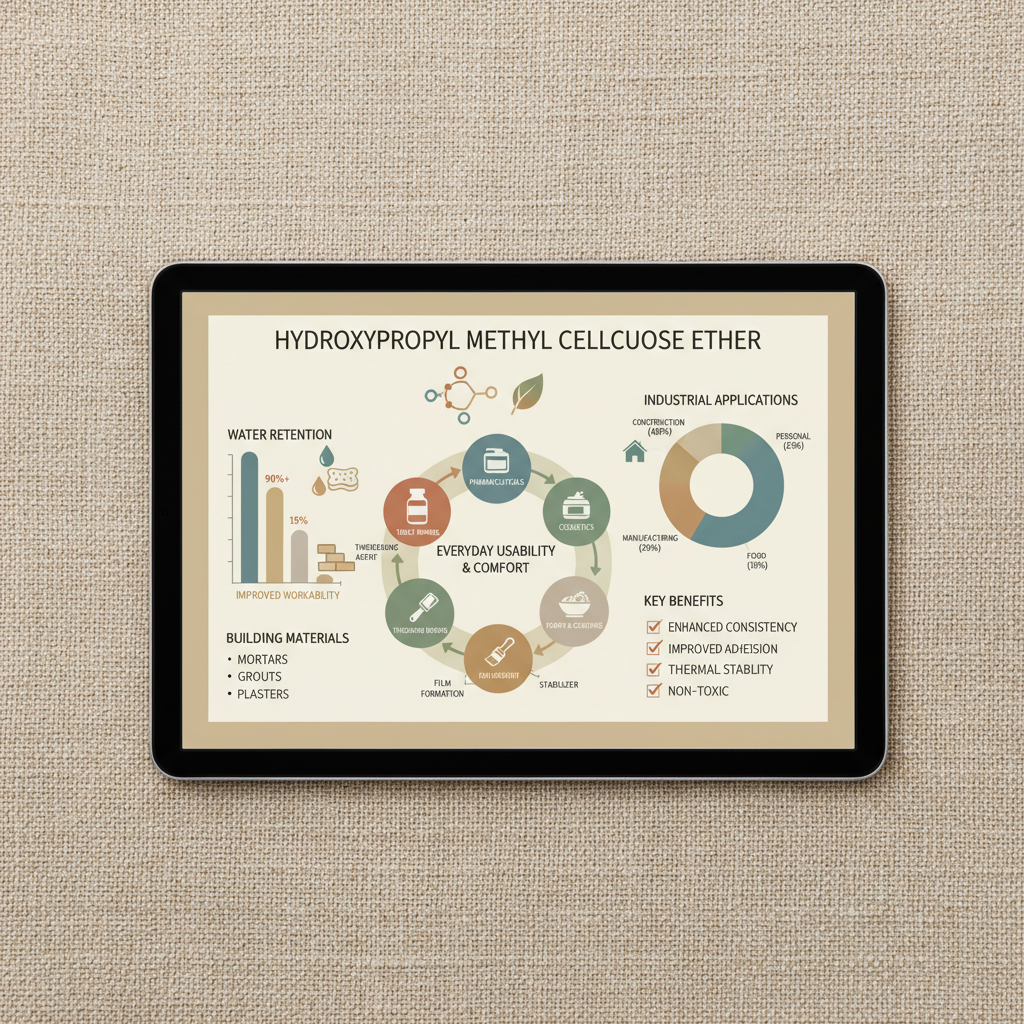
Hydroxypropyl methyl cellulose ether finds extensive use in the pharmaceutical industry as a binder, film-coating agent, and controlled-release matrix in tablets and capsules. Its biocompatibility and ability to modify drug release profiles make it a crucial excipient for various medications. In construction, it's added to cement-based materials to improve workability, water retention, and adhesion, leading to enhanced durability and crack resistance.
Within the food industry, HPMC acts as a thickener, stabilizer, and emulsifier in a wide range of products, including sauces, dressings, desserts, and bakery items. It provides texture, prevents syneresis (water separation), and extends shelf life. In personal care, it’s used in shampoos, lotions, and creams to provide thickening, stabilization, and film-forming properties.
Geographically, the demand for HPMC is strongest in Asia-Pacific, driven by rapid industrialization and population growth. North America and Europe are also significant consumers, particularly in the pharmaceutical and construction sectors. Organizations like the World Food Programme benefit from its inclusion in fortified food products to address malnutrition in disaster-stricken areas.
HPMC Application Ratings by Industry
Advantages and Long-Term Value of HPMC
Hydroxypropyl methyl cellulose ether provides significant cost advantages over many synthetic polymers, especially considering its comparable performance. Its ease of processing and compatibility with a wide range of other ingredients contribute to efficient manufacturing processes. Moreover, its inherent biodegradability aligns with growing sustainability concerns.
From a sustainability perspective, HPMC is derived from renewable cellulose sources, reducing reliance on fossil fuels. Its non-toxicity and biocompatibility address critical safety concerns, particularly in pharmaceutical and food applications. The long-term value lies in its contribution to creating more sustainable and responsible products, fostering brand trust and customer loyalty.
Future Trends in Hydroxypropyl Methyl Cellulose Ether
Ongoing research is focused on enhancing the properties of HPMC through novel modification techniques, aiming to create grades with improved solubility, thermal stability, and controlled-release characteristics. Developments in green chemistry are exploring more sustainable production methods for HPMC, minimizing environmental impact.
The integration of HPMC with nanotechnology is opening up new possibilities for targeted drug delivery and advanced material applications. The demand for bio-based and biodegradable polymers will continue to drive innovation in HPMC production and application, contributing to a more circular economy.
Challenges and Solutions Regarding HPMC
One challenge is the potential for batch-to-batch variability in HPMC properties, stemming from variations in cellulose source and manufacturing processes. Implementing rigorous quality control measures and standardized testing protocols is crucial to mitigate this issue. Ensuring consistent molecular weight distribution and degree of substitution is paramount for reliable performance.
Another limitation is the relatively high cost of certain specialized HPMC grades. Researchers are actively investigating alternative production methods and raw material sources to reduce costs without compromising quality. Optimizing formulation design to minimize HPMC usage while maintaining desired functionality is also a key strategy.
Finally, addressing concerns about sourcing cellulose from sustainably managed forests is critical. Certification schemes like the Forest Stewardship Council (FSC) can help ensure responsible sourcing practices, promoting environmental stewardship and preserving forest ecosystems.
Summary of HPMC Properties, Applications, Performance and Challenges
| Property |
Application |
Performance Impact |
Potential Challenges |
| Viscosity Control |
Food Thickening |
Enhanced Texture & Stability |
Achieving Consistent Viscosity |
| Film Formation |
Pharmaceutical Coatings |
Controlled Drug Release |
Film Brittleness |
| Water Retention |
Construction Mortars |
Improved Workability & Crack Resistance |
Hygroscopicity |
| Thermal Gelation |
Temperature Sensitive Foods |
Controlled Texture Change |
Temperature Sensitivity |
| Biocompatibility |
Cosmetic Formulations |
Reduced Irritation Potential |
Allergic Reactions (rare) |
| Sustainability |
Packaging Materials |
Reduced Environmental Impact |
Sourcing of Cellulose |
FAQS
The pharmaceutical, construction, food, cosmetics, and coatings industries are currently experiencing the most significant benefits from using hydroxypropyl methyl cellulose ether. Its versatile properties allow for a wide range of applications, from controlled drug release and improved cement workability to enhanced food texture and film-forming capabilities in personal care products. The rising demand for sustainable materials also boosts its adoption across diverse sectors.
The molecular weight of hydroxypropyl methyl cellulose ether significantly impacts its viscosity and solution behavior. Higher molecular weight HPMC generally leads to higher viscosity solutions. Lower molecular weights provide thinner solutions and better flow characteristics. Selecting the appropriate molecular weight is crucial for achieving desired performance in a given application, such as controlling the thickness of a sauce or the drug release rate in a tablet.
While not rapidly biodegradable like some natural polymers, hydroxypropyl methyl cellulose ether exhibits biodegradability under certain conditions. It's broken down by microbial action in soil and water, although the process can be slow. Its derivation from renewable cellulose sources makes it a more sustainable alternative to many fully synthetic polymers, contributing to a lower environmental footprint.
Several factors influence the cost of hydroxypropyl methyl cellulose ether, including the grade (viscosity, degree of substitution), production volume, raw material sourcing, and manufacturer. Specialized grades with specific performance characteristics generally command a higher price. Fluctuations in cellulose pulp prices and energy costs can also impact overall production costs.
The quality of hydroxypropyl methyl cellulose ether is ensured through rigorous testing and adherence to industry standards like ISO. Key quality control parameters include viscosity, moisture content, pH, heavy metal content, and degree of substitution. Manufacturers employ various analytical techniques to verify these parameters and ensure consistency between batches. Reputable suppliers provide certificates of analysis (COAs) for each product batch.
Hydroxypropyl methyl cellulose ether should be stored in a cool, dry, and well-ventilated area, away from direct sunlight and moisture. Proper storage is critical to prevent clumping or degradation. Containers should be tightly sealed to protect against humidity. Following the manufacturer's recommendations for storage conditions will maintain the product's quality and performance over time.
Conclusion
Hydroxypropyl methyl cellulose ether stands out as a remarkably versatile polymer with widespread applications across diverse industries. Its unique combination of properties—thickening, film-forming, water retention, and thermal gelation—provides solutions to complex challenges in pharmaceuticals, construction, food science, and more. The shift towards sustainable and biocompatible materials further solidifies HPMC's importance in the global market.
Looking ahead, continued innovation in HPMC production and modification will unlock new possibilities and expand its application scope. Addressing current challenges related to cost and sourcing will be critical for maximizing its potential and fostering wider adoption. To learn more about the benefits of hydroxypropyl methyl cellulose ether and explore our product range, visit our website today!