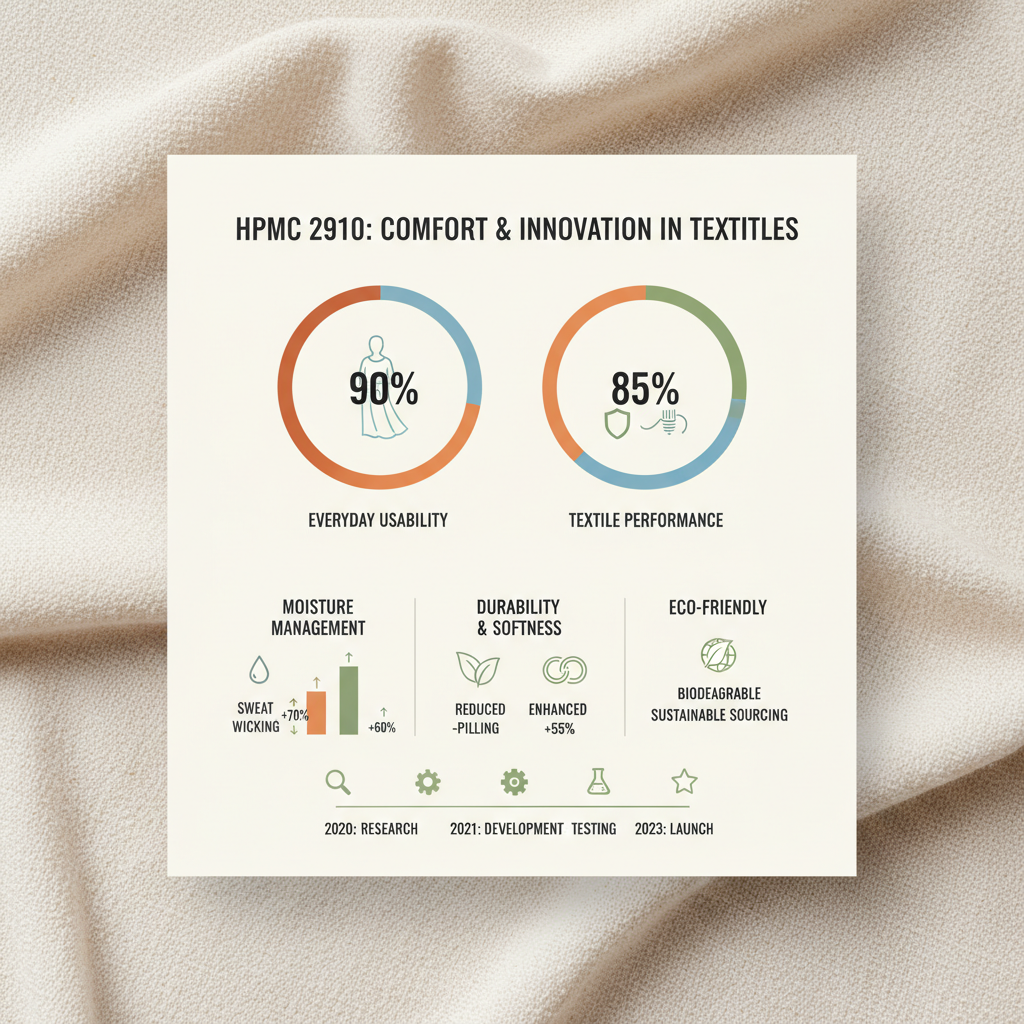
In the complex landscape of modern chemical manufacturing, hpmc 2910 stands as a pivotal additive that bridges the gap between raw material stability and final product performance. As a high-performance cellulose ether, it provides essential rheological control, ensuring that industrial formulations maintain their integrity under diverse environmental stressors. For manufacturers in the specialty chemicals sector, understanding the nuances of this polymer is not just a technical requirement but a strategic advantage in achieving product consistency.
The global demand for precise thickeners and stabilizers has surged, driven by the construction, pharmaceutical, and cosmetic industries. Within this context, hpmc 2910 is highly valued for its ability to enhance water retention and improve the workability of various substrates. By optimizing the molecular weight and substitution levels, it allows engineers to fine-tune the viscosity of their mixtures, leading to reduced waste and increased operational efficiency.
Whether it is used to prevent sagging in cement-based renders or to control the release rate of active ingredients in pharmaceutical tablets, the versatility of hpmc 2910 is unmatched. This guide explores the technical depth of this chemical agent, analyzing its global relevance, core functional components, and the innovative trends that are shaping its future in the specialty chemical industry.

Global Market Relevance of hpmc 2910
On a global scale, the adoption of hpmc 2910 is closely linked to the rapid urbanization of emerging economies. According to industry data aligned with ISO standards for chemical additives, the shift toward sustainable building materials has increased the reliance on cellulose ethers. In regions like Southeast Asia and Latin America, where temperature fluctuations can compromise construction quality, this additive serves as a critical safeguard against premature drying and cracking in mortar and tile adhesives.
Beyond construction, the pharmaceutical sector relies on the purity and consistency of hpmc 2910 to ensure the safety of drug delivery systems. The challenge for many manufacturers has been maintaining a stable supply chain of high-purity grades that meet stringent international pharmacopeia standards. By solving the problem of inconsistent viscosity, this chemical enables the production of reliable controlled-release tablets that improve patient adherence globally.
Technical Definition and Chemical Structure
In simple terms, hpmc 2910 (Hydroxypropyl Methylcellulose) is a non-ionic cellulose ether derived from natural polymer cellulose. Through a sophisticated process of etherification, the hydroxyl groups of the cellulose chain are replaced with methoxyl and hydroxypropyl groups. This chemical modification transforms a water-insoluble fiber into a water-soluble polymer that can create stable gels and thick solutions.
The "2910" designation refers specifically to the molar substitution ratio of the methoxyl and hydroxypropyl groups. This precise ratio is what gives the polymer its unique thermal gelation properties, meaning it can transition from a liquid to a gel state as temperature increases. This characteristic is indispensable in modern industrial processes where temperature-triggered thickening is required for precise application of coatings or gels.
Connecting this to humanitarian and industrial needs, hpmc 2910 ensures that essential materials—from medical adhesives to emergency shelter coatings—possess the necessary durability and ease of application. It converts raw, dry parameters into a functional material that supports the infrastructure of modern civilization, making it a cornerstone of specialty chemical manufacturing.
Core Components Influencing Performance
The durability of a formulation utilizing hpmc 2910 is primarily driven by its water-retention capability. By forming a protective film around water molecules, it prevents the rapid evaporation that typically leads to shrinkage and structural failure in cementitious materials. This ensures that the hydration process of cement is complete, resulting in a significantly stronger and more durable final structure.
Scalability in production is another core factor. Because hpmc 2910 is highly compatible with various other additives—including CMC (Carboxymethyl Cellulose)—it allows manufacturers to scale up their batches without fearing phase separation or viscosity crashes. This compatibility is essential for large-scale industrial plants that require high throughput without sacrificing the precision of the chemical mix.
Finally, cost efficiency is achieved through the high efficacy of hpmc 2910 at low concentrations. Instead of using bulk thickeners that might interfere with the chemical properties of the base material, a small percentage of this high-grade cellulose ether provides the necessary rheology. This reduction in additive volume lowers transportation costs and reduces the environmental footprint of the manufacturing process.
Comparative Efficiency Analysis
When analyzing the effectiveness of hpmc 2910, it is crucial to compare it against alternative thickening agents. While traditional starches may offer lower initial costs, they lack the thermal stability and microbial resistance inherent in high-purity cellulose ethers. In rigorous industrial testing, the consistency of the gel network formed by hpmc 2910 ensures a more predictable outcome across different climate zones.
The following data represents a comparative rating of various application methods using different grades of the polymer. This allows engineers to determine which specific variant of the formulation yields the best balance between viscosity and application speed.
Performance Metrics of hpmc 2910 Variants
Industrial Use Cases and Applications
In real-world contexts, hpmc 2910 is widely applied in high-stakes environments. For example, in the construction of high-rise buildings in humid tropical zones, it is used in exterior wall plasters to prevent water from being absorbed too quickly by the masonry, which prevents the "mapping" effect or surface cracking. This application is vital for maintaining the aesthetic and structural integrity of urban infrastructure.
Furthermore, in remote industrial zones where water quality varies, the non-ionic nature of hpmc 2910 makes it an ideal choice. Unlike ionic thickeners, it does not react strongly with minerals found in hard water, ensuring that the viscosity of the final product remains constant regardless of the local water source. This reliability makes it the preferred choice for international NGOs and construction firms operating in diverse geographic regions.
Sustainability and Long-Term Value
The long-term value of integrating hpmc 2910 extends beyond mere technical performance to encompass environmental sustainability. As a derivative of cellulose—a renewable resource found in plant cell walls—it offers a greener alternative to synthetic petroleum-based polymers. This aligns with global shifts toward "green chemistry," helping companies reduce their carbon footprint while maintaining industrial strength.
From a social and emotional angle, the use of high-quality additives like hpmc 2910 builds trust and safety. In pharmaceutical applications, the precise control of drug release rates directly impacts patient health and dignity, ensuring that medication is delivered safely and effectively. In construction, it ensures that homes are built to last, providing safety and security for families.
Ultimately, the investment in premium cellulose ethers represents a commitment to innovation. By prioritizing materials that offer both reliability and sustainability, manufacturers can future-proof their product lines against stricter environmental regulations and evolving consumer demands for eco-friendly products.
Future Trends in Cellulose Chemistry
The future of hpmc 2910 is being shaped by the digital transformation of chemical engineering. We are seeing the rise of "smart formulations" where AI-driven algorithms predict the exact amount of cellulose ether needed based on real-time weather data at a construction site. This precision minimizes waste and maximizes the efficiency of the material, marking a shift from static recipes to dynamic, data-driven mixing.
Additionally, there is a growing trend toward the integration of nano-cellulose with hpmc 2910 to create ultra-high-strength biofilms. These hybrid materials are expected to revolutionize the packaging industry, providing oxygen barriers that are entirely biodegradable, thus addressing the global plastic pollution crisis.
As automation becomes standard in the chemical plant, the synthesis of hpmc 2910 is moving toward continuous flow manufacturing. This transition will allow for even tighter control over the molar substitution ratios, resulting in a product with unprecedented purity and consistency.
Comparison of hpmc 2910 Performance Across Different Industrial Grades
| Grade Type |
Viscosity Range (mPa.s) |
Water Retention Score |
Primary Application |
| Pharma Grade |
5,000 - 15,000 |
9.8 |
Drug Delivery |
| Construction Grade A |
40,000 - 100,000 |
9.2 |
Tile Adhesive |
| Construction Grade B |
20,000 - 60,000 |
8.5 |
Wall Putty |
| Cosmetic Grade |
1,000 - 10,000 |
7.9 |
Eye Drops/Gels |
| Industrial Grade |
10,000 - 30,000 |
8.1 |
Paint Thickener |
| Specialty Grade |
Customized |
9.0 |
3D Printing Ink |
FAQS
The primary difference lies in the specific molar substitution ratio of methoxyl and hydroxypropyl groups. The 2910 grade is engineered for optimal thermal gelation and water retention, making it more suitable for high-performance construction materials and pharmaceutical controlled-release systems compared to general-purpose grades.
It significantly extends the "open time"—the period during which the adhesive remains tacky and allows for adjustment of the tile. By slowing down the evaporation of water into the substrate, hpmc 2910 ensures the adhesive maintains its bonding properties for longer, reducing waste and improving installation quality.
Yes, they are highly compatible. In many industrial formulations, HPMC and CMC are used together to achieve a synergistic effect. While hpmc 2910 provides excellent thermal stability and water retention, CMC can enhance the initial thickening and stability of the mixture, resulting in a more robust rheological profile.
Yes, but it requires proper dispersion to avoid the formation of "fish-eyes" (lumps of undissolved powder). Because it is non-ionic, it dissolves well in cold water, though heating the solution slightly or using a high-shear mixer can accelerate the hydration process and ensure a smooth, homogenous gel.
It should be stored in a cool, dry, and well-ventilated area, away from direct sunlight and moisture. Since cellulose ethers are hygroscopic, keeping the bags tightly sealed is critical. Exposure to extreme humidity can cause the powder to clump, which may affect the dissolution speed and overall viscosity of the final batch.
Purity is typically verified through a combination of viscosity testing using a Brookfield viscometer and ash content analysis. Professional labs also use NMR (Nuclear Magnetic Resonance) spectroscopy to confirm that the molar substitution ratio matches the 2910 specification, ensuring the chemical behavior is consistent with industry standards.
Conclusion
In summary, hpmc 2910 is far more than a simple thickener; it is a sophisticated tool for chemical engineers to control the physical properties of their products. From improving the structural integrity of urban infrastructure through superior water retention to enhancing the precision of medical drug delivery, its impact is felt across multiple critical industries. By balancing technical efficiency with sustainable, cellulose-based chemistry, it provides a reliable path toward higher product quality and reduced environmental impact.
Looking forward, the integration of AI and green chemistry will only elevate the role of hpmc 2910 in the global market. For manufacturers seeking to optimize their formulations, transitioning to high-purity, consistent grades of cellulose ethers is no longer optional but a necessity for competitiveness. We encourage industry professionals to explore the synergistic possibilities of these materials to drive innovation in their respective fields. Visit our website for more technical insights: www.tjhpmc.com