March 17, 2026
Hydroxypropyl Methylcellulose (HPMC) is a versatile cellulose ether derivative widely used across various industries, including construction, pharmaceuticals, food, and cosmetics. Among the different grades of HPMC, K4M stands out due to its specific properties and applications. This article provides a detailed overview of hydroxypropyl methylcellulose K4M, exploring its characteristics, applications, and benefits. We will delve into why this specific grade is preferred for numerous formulations and provide insight into its crucial role in enhancing product performance. Choosing the right HPMC grade is essential for optimal results, and K4M offers a unique balance of properties that make it a valuable ingredient.

Hydroxypropyl Methylcellulose (HPMC) is a non-ionic, water-soluble polymer derived from cellulose. The "K4M" designation refers to a specific viscosity grade and methoxyl content. The 'K' indicates the viscosity range, and '4M' signifies a viscosity of approximately 4000 mPa·s (measured as a 2% solution at 20°C). The methoxyl content typically ranges from 28-30%. This grade exhibits excellent thickening, binding, film-forming, and suspending properties, making it a preferred choice for applications requiring moderate viscosity and controlled release characteristics. The balance of these properties is what makes HPMC K4M so valuable.
Key Highlights: HPMC K4M offers a balance of thickening, binding, film-forming, and suspending properties. It’s a versatile ingredient suitable for a wide array of applications due to its controlled viscosity.
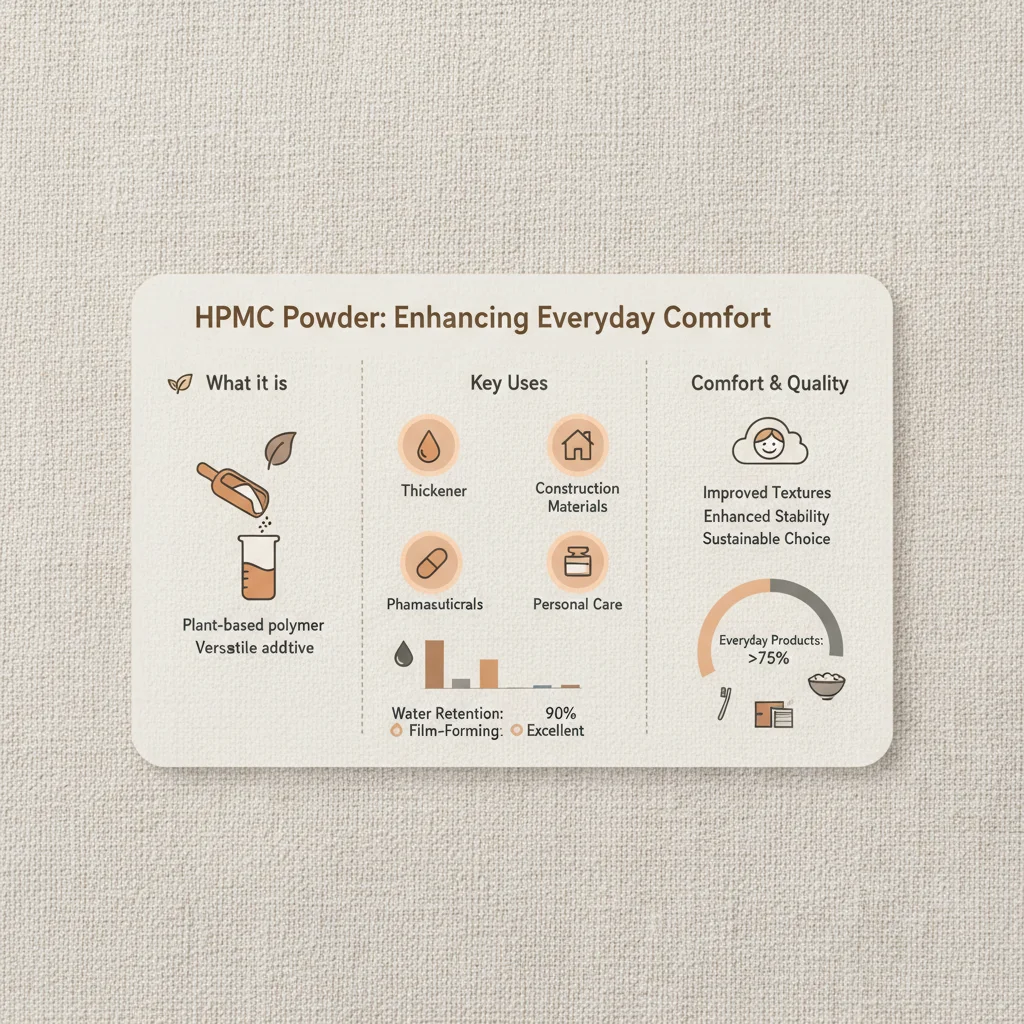
The versatile properties of HPMC K4M make it suitable for a diverse range of applications. In the construction industry, it is used as a cement additive to improve workability, water retention, and adhesion. In the pharmaceutical sector, it serves as a binder, film-coating agent, and controlled-release matrix. The food industry utilizes it as a thickener, stabilizer, and emulsifier in various food products. Additionally, HPMC K4M finds applications in cosmetics, paints, and inks. Tjhpmc provides high-quality HPMC K4M tailored for specific industrial needs.
Application Areas:
• Construction (Cement Additive)
• Pharmaceuticals (Binder, Film Coating)
• Food Industry (Thickener, Stabilizer)
• Cosmetics (Emulsifier, Viscosity Control)
Different HPMC grades (K100, K200, K4M, etc.) offer varying viscosity levels and characteristics. K4M provides a good balance between thickening and ease of handling. Higher 'K' values (like K100) indicate higher viscosity, which can be beneficial for applications requiring significant thickening but may be harder to process. Lower 'K' values (like K100LD) offer lower viscosity, suitable for applications where minimal thickening is needed. Understanding these differences is crucial for selecting the optimal grade for your specific formulation. Contact Tjpmc for expert guidance on choosing the right HPMC grade.
Utilizing HPMC K4M offers several advantages. It enhances product stability, improves texture and consistency, and provides excellent water retention. In construction, it minimizes cracking and improves adhesion. In pharmaceuticals, it ensures consistent drug release profiles. Furthermore, HPMC K4M is odorless, tasteless, and non-toxic, making it suitable for use in food and cosmetic applications. Tjhpmc’s HPMC K4M meets stringent quality standards, ensuring reliable performance.
At Tjhpmc, we adhere to strict quality control measures to ensure our HPMC K4M meets the highest industry standards. Our product undergoes rigorous testing for viscosity, moisture content, ash content, and heavy metal impurities. We provide detailed specifications sheets with each batch to guarantee consistent performance.
Selecting the appropriate HPMC grade is vital for achieving desired product characteristics. Hydroxypropyl Methylcellulose K4M offers a versatile solution with a balanced combination of thickening, binding, and film-forming properties. With its wide range of applications and consistent quality, HPMC K4M is an excellent choice for various industries. Contact us today to learn more about how HPMC K4M can benefit your specific application.
When stored in a cool, dry place away from direct sunlight and moisture, HPMC K4M typically has a shelf life of at least two years. Proper storage is crucial to maintain its functionality and prevent degradation. We recommend storing the material in its original, sealed packaging to ensure optimal quality. Over time, exposure to humidity can cause the product to absorb moisture, affecting its viscosity and performance.
HPMC K4M dissolves best in cold water with continuous stirring. Adding the powder slowly while vigorously stirring prevents clumping. Avoid adding the powder directly to hot water, as this can cause lumping and hinder complete dissolution. Allow sufficient time for complete hydration – typically 20-30 minutes – to ensure a homogenous solution. Using a high-shear mixer can accelerate the dissolution process.
HPMC K4M is generally considered non-toxic and safe for handling. However, it's recommended to wear a dust mask during handling to avoid inhalation of the powder. Avoid contact with eyes and skin. In case of contact, rinse thoroughly with water. Refer to the Material Safety Data Sheet (MSDS) available on our website (Tjhpmc) for detailed safety information.
Hit enter to search or ESC to close